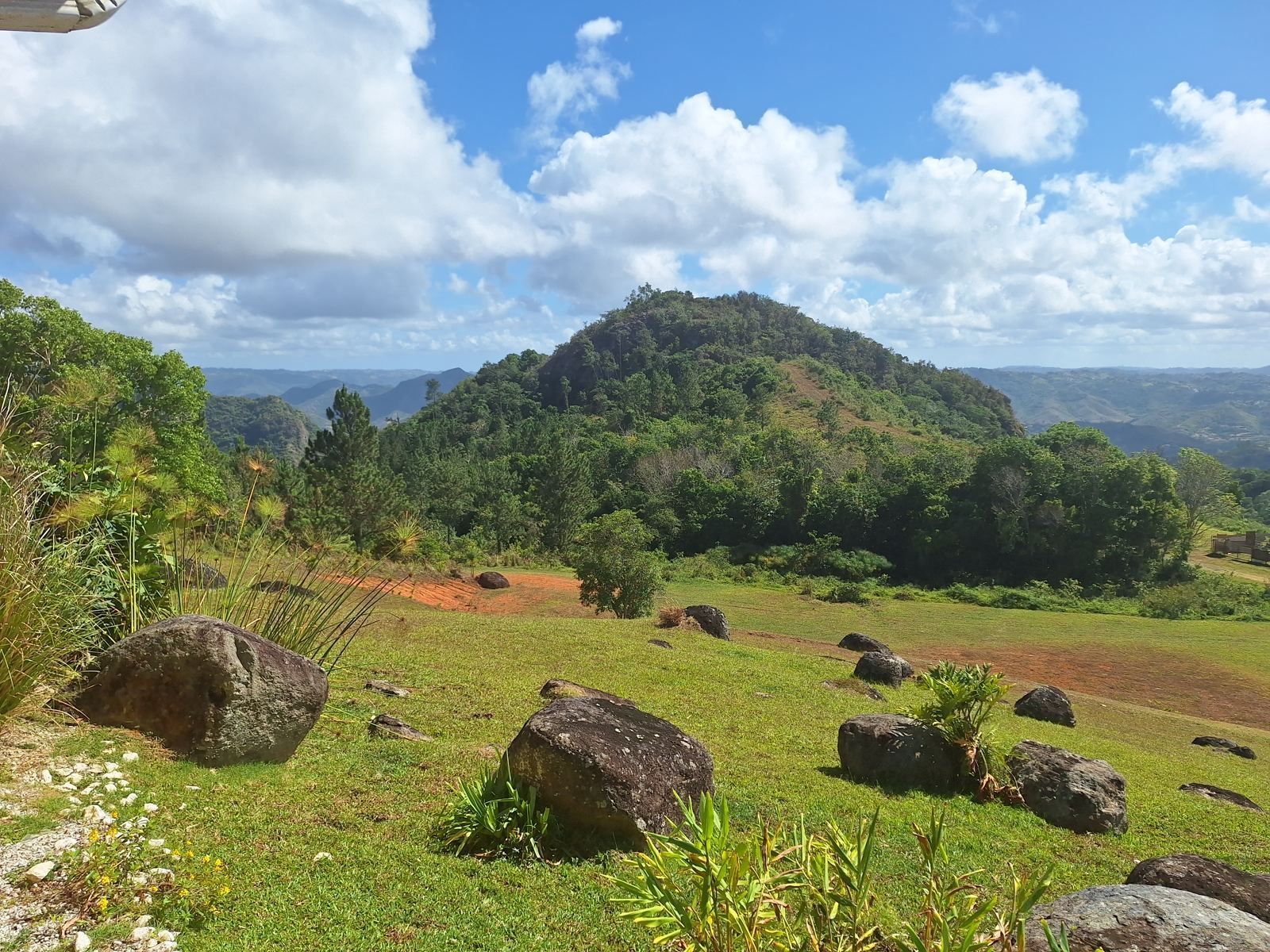
Banks in Puerto Rico finance houses on modest lots. They are far less willing to finance 100 acres of mountain land with a farmhouse, a second residence and a herd of cattle, and mainland lenders rarely lend on the island at all. So a large share of rural transactions here close in cash, and when they do not, they close through one of two owner-assisted structures: owner financing, or a lease with an option to buy. This guide explains the second one, which Puerto Rican contracts call an arrendamiento con opción a compra, from both sides of the table.
What a lease with option to buy is
A lease with option to buy is two contracts bundled together. The first is an ordinary lease: the tenant occupies and uses the property for a fixed term and pays rent. The second is an option: in exchange for a payment up front, the owner grants the tenant the exclusive right to buy the property at an agreed price at any time during the term, or at its end. If the tenant exercises the option, the deal becomes a normal sale and closes before a notary. If the tenant does not, the lease simply ends, the owner keeps the option payment, and the property goes back on the market.
The key word is option. The tenant may buy. The tenant is not required to buy. That distinction, which the next sections come back to, is what makes the structure attractive to people who intend to purchase but cannot yet, whether because their mainland house has not sold, their residency has not been established, or their bank wants to see a year of island income first.
The five moving parts
- The option fee (prima de opción). A one-time payment made at signing for the right to buy. It is almost always non-refundable. If the option is exercised it is credited against the purchase price; if not, the owner keeps it as compensation for taking the property off the market. On houses the fee typically runs 1 to 5 percent of the price. On a multi-million-dollar estate it is negotiated, and a serious owner will expect enough to make walking away costly.
- The term. How long the tenant has to decide. One to three years is common. Shorter terms favor the owner; longer terms favor the tenant. Owners who have been through a lease option before often prefer a shorter initial term with a renewal that costs an additional option payment.
- The purchase price. Usually fixed at signing, which is the main reason a buyer pays for an option in the first place. Alternatives are a price that steps up a set percentage each year of the term, or a price set by an appraisal at the time of exercise. Whatever the method, it belongs in the contract in plain numbers.
- Rent and rent credits. Market rent for the property, plus, in many agreements, a stated portion of each month's rent that is credited toward the price if the option is exercised. Credits are an incentive to close, not a savings account: like the option fee, they are forfeited if the tenant walks.
- Responsibilities during the term. Who pays property tax, insurance, utilities, repairs, grounds and animal care, and whether the tenant may make improvements. On a working farm this section matters as much as the price.
Lease option, lease purchase and owner financing compared
Three structures get confused with each other, and the contract should say clearly which one you are signing.
- Lease with option to buy. Tenant has the right, not the obligation, to purchase. Title stays with the owner until closing. If the tenant does not buy, the owner keeps the option fee and credits and the relationship ends.
- Lease purchase (arrendamiento con compromiso de compra). Tenant is contractually obligated to buy by a set date. A tenant who cannot close is in breach, and the owner may have a damages claim beyond the deposit. Owners like the certainty; buyers should be cautious about committing to a closing that depends on financing they do not yet have.
- Owner financing (financiamiento del vendedor). The sale closes now. Title transfers to the buyer, who signs a mortgage note to the seller for part of the price and makes payments, usually with a balloon in three to seven years. The seller is a lender, secured by a recorded mortgage, and recovers the property only through judicial foreclosure if the buyer defaults.
In practice the lease option is the lower-commitment first step, and an owner-financed sale is often where a successful lease option ends up: the tenant exercises the option, and the owner carries part of the price to get the deal closed.
Why buyers and sellers use it in Puerto Rico
For buyers, the structure solves a timing problem. Relocating families can move onto the land now and buy once the mainland house sells. Act 60 decree holders can live on the island full time while the two-year window to purchase residential property runs, then exercise the option to satisfy the purchase requirement (confirm timing with your decree attorney). Anyone planning an agricultural or hospitality operation can test the land, the water, the roads and the climate through a full wet season before committing the purchase price. And a buyer who needs bank financing arrives at the bank a year later as an island resident with a track record on the very property being financed.
For owners, the structure produces income from a property that would otherwise sit empty while it is marketed, puts a committed occupant in place who maintains the grounds and the animals, and converts a looker into a buyer who has already paid a meaningful, non-refundable sum. Owners of large rural properties also know their realistic buyer pool is small and that a one-hour visit rarely sells 100 acres; a year of living there does.
The honest caveat is that not every option is exercised. Tenants' circumstances change, financing falls through, a crypto portfolio goes the wrong way. A well-structured agreement makes the owner whole for that outcome through the option fee and market rent, and a well-advised tenant understands that the fee is the price of flexibility, not a deposit that comes back.
Terms that protect both sides
- Proof of funds or a financing plan at signing. Owners should ask how the tenant expects to pay at exercise, and tenants should be able to answer.
- A non-refundable option fee sized to the deal, paid at signing, credited at closing, forfeited on walk-away. Spell out all three.
- A clear exercise procedure. Written notice by a stated date, a closing deadline after notice, who drafts the deed, and what happens if the tenant gives notice and then fails to close.
- Market rent, with any credit stated as a dollar figure per month.
- Taxes, insurance and maintenance allocated line by line. A common split on an estate: owner pays CRIM property tax and insures the structures; tenant pays utilities, routine maintenance, grounds, fencing and animal care, and carries contents and liability insurance naming the owner.
- Improvements. Tenant improvements require written consent, become part of the property, and are not reimbursed if the option is not exercised, unless the agreement says otherwise.
- Agricultural use. If the tenant will farm or run livestock, say what is permitted, who holds any bona fide farmer certification, and how the land is to be left.
- Assignment. Whether the tenant may assign the option, and on what terms. Owners usually say no, or only with consent.
- Default. Missed rent should put the option at risk after a cure period, so that a tenant in arrears cannot hold the property off the market.
- Brokers. How any listing or buyer's agent commission is handled at exercise.
Notaries, deeds and the Property Registry
Puerto Rico is a civil-law jurisdiction. Leases and option contracts can be signed privately, but an option to purchase real property can also be executed as a public deed before a Puerto Rico notary (who is always an attorney) and, if it meets the Registry's requirements, recorded in the Property Registry against the parcel. Recording gives the option effect against third parties, so that the owner cannot sell or mortgage the property out from under the tenant during the term. On a transaction the size of an estate, recording is usually worth the cost; on a small lot it may not be. The eventual sale, if the option is exercised, is always a public deed recorded in the Registry, with the notary collecting stamps and recording fees at closing. Both sides should have their own attorney review the agreement, and the notary who prepares the deed does not represent either of them.
Example terms on a 100-acre estate
To make this concrete, the owners of the Cayey estate described on this site, a gated 100-acre property at 2,100 feet with a remodeled three-bedroom residence, a second house, two creeks, a well and a cistern, offer it three ways: for sale at $2,375,000, reduced from $2,500,000; on a furnished long-term lease at $15,000 per month; or as a lease with option to buy on negotiated terms. A representative structure for the third route looks like this:
- Term of one to two years, with a renewal available for a further option payment.
- A non-refundable option fee paid at signing, credited in full to the price at closing.
- Purchase price fixed at signing.
- Rent at the long-term lease rate, with a stated monthly credit toward the price if the option is exercised.
- Owner pays property tax (about $990 per year) and insures the structures; tenant pays utilities, grounds, animals and routine maintenance.
- Proof of funds or a financing plan at signing. Owner financing of part of the price at exercise can be discussed.
- Buyer's agents protected.
If you would like to propose terms, use the inquiry form and choose "Another arrangement" in the interest field, or come and see the property first; private visits are by appointment. For the broader picture on buying rural property here, see Buying a farm or mountain estate in Puerto Rico.
Frequently asked questions
What is the difference between a lease option and a lease purchase?
How much is a typical option fee?
Is the purchase price fixed at signing?
Can a lease option be recorded in the Puerto Rico Property Registry?
Who pays property taxes, insurance and maintenance during the lease?
Does a lease with option help with Act 60 residency?
Sources and further reading
- Rent-to-own in Puerto Rico, Gerald, on arrendamiento con opción a compra, option fees and rent credits.
- Chambers Real Estate 2026, Puerto Rico Law and Practice, Pietrantoni Méndez & Álvarez LLC, on the Civil Code, the Real Property Registry Act and notarial practice.
This article is general information, not legal, tax or investment advice. Lease and option agreements in Puerto Rico should be drafted or reviewed by a Puerto Rico attorney for each party. Terms described for the Cayey estate are illustrative and subject to negotiation.