Most people moving to Puerto Rico choose between the same few places: Condado and Old San Juan, the gated resorts of Dorado, or Palmas del Mar and Río Grande on the east coast. They are popular for good reasons. But they are not the only option, and for people who want space, privacy, a cooler climate and land of their own, the central mountains an hour south of San Juan are a real alternative. This guide compares the two honestly, so you can decide which island life suits you before you buy.
The usual relocation map
Mainland relocators, and especially Act 60 decree holders, cluster in a handful of places.
- Condado, Ocean Park and Old San Juan. City living: high-rise condos on the beach, walkable restaurants and nightlife, and ten minutes to the airport. Space is scarce and prices per square foot are among the island's highest.
- Dorado. About 30 to 40 minutes west of San Juan. Its gated communities, including Dorado Beach and the surrounding resort developments, have become the best-known address for wealthy newcomers, with golf, beach clubs and private schools nearby. Homes in the top enclaves commonly sell for several million dollars.
- Guaynabo. The established suburb of San Juan's professional class, with gated urbanizations, private schools and malls.
- Palmas del Mar and Río Grande. East of San Juan. Palmas del Mar in Humacao is a 2,750-acre resort community with a marina, golf and beach. Río Grande, near El Yunque, includes the Bahía Beach resort community.
These places share real advantages: English is common, services are built around newcomers, the beach is close, and you can reach the airport quickly. They also share the same limits. Lots are small, neighbors are close, HOA rules are strict, the coast is hot most of the year, and storm surge and coastal flooding are part of the risk picture.
The mountain alternative
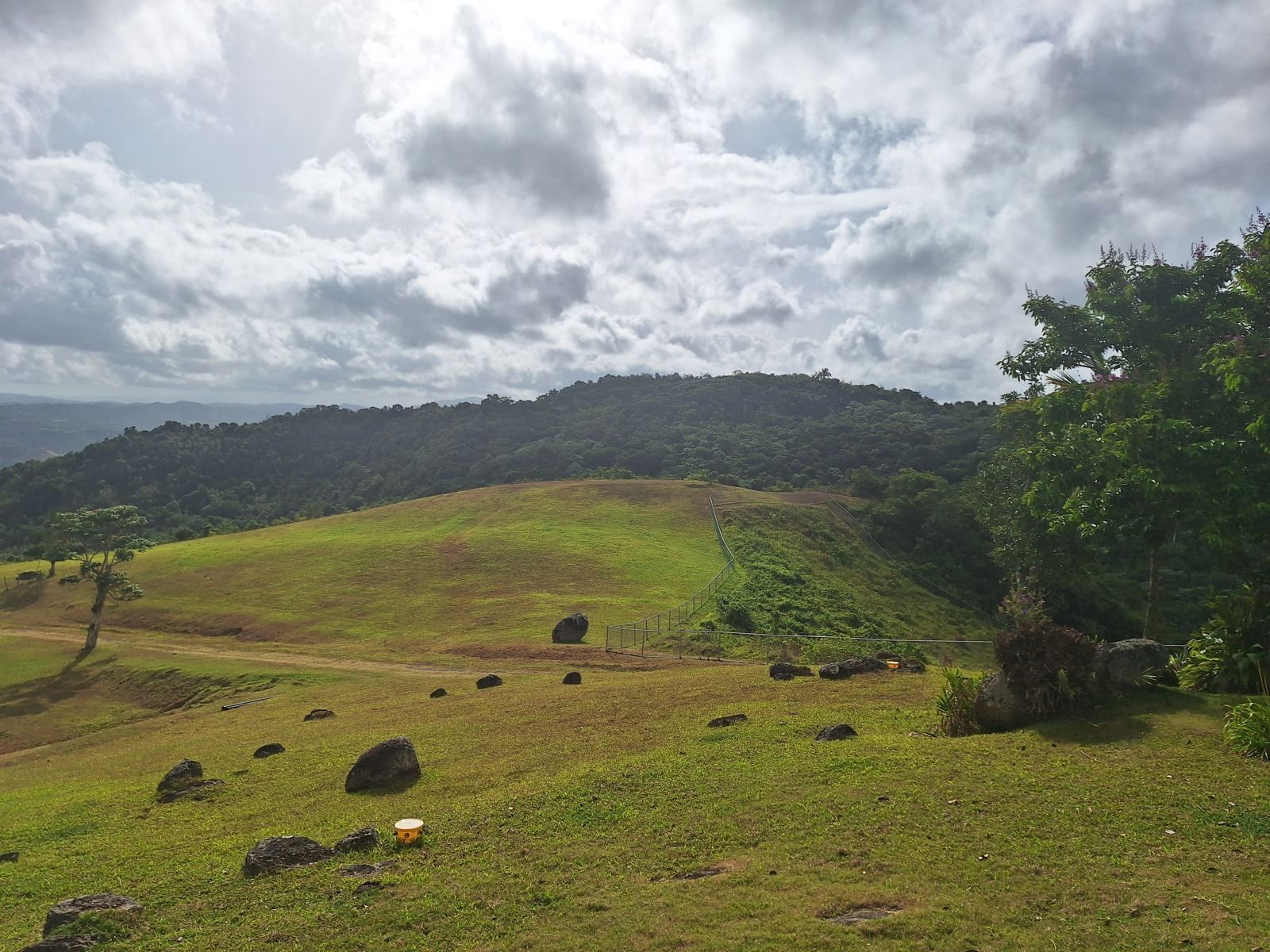
The Cordillera Central and the Sierra de Cayey run east to west across the middle of the island. The towns along the PR-52 expressway south of San Juan, including Caguas, Cidra, Cayey and, a little farther in, Aibonito, are where San Juan families have long kept weekend houses and where the governor's official summer residence stands, in Jájome Alto in Cayey. Cayey's town center sits at about 1,300 to 1,500 feet, and the ridges above it rise past 2,000 feet. That altitude is the point. Afternoons are often 10 to 20 degrees cooler than San Juan, winter nights drop into the 50s and low 60s, and many houses get by without air conditioning.
What the mountains offer that the coast cannot is land. Properties of 20, 50 or 100 acres with a residence, pasture, forest and creeks exist here at prices that would buy a few thousand square feet of condo in Condado. For a closer look at the individual areas, see Puerto Rico's mountain second-home areas compared and Living in Cayey, Puerto Rico.
Side by side: coast versus mountains
- Climate. Coast: hot and humid year round, cooled by sea breezes, with most life lived in air conditioning. Mountains: mild days, cool nights, frequent mist and more rain, especially from May to November.
- Space and privacy. Coast: condos, townhouses and lots of a quarter acre to an acre inside gated communities. Mountains: from a few acres to a hundred or more, often behind your own gate.
- Distance to San Juan and the airport. Condado: about 10 minutes. Dorado and Guaynabo: about 20 to 40 minutes. Palmas del Mar: about an hour. Cayey: about 50 to 70 minutes on the expressway.
- Beach. Coast: at your door. Mountains: 30 to 40 minutes south to the Caribbean side, or an hour to the north coast.
- Storm risk. Coast: wind, storm surge and coastal flooding. Mountains: no surge, but heavy rain, wind, landslides and longer power and road outages.
- Rules. Coast: HOA covenants, architectural review, rental limits and resort fees. Mountains: zoning and permits, but usually no HOA.
Daily life: commute, schools, healthcare, errands
Commute. PR-52 is a modern toll expressway, and the drive from Cayey to San Juan is easy outside rush hour. The roads that branch off it into the barrios are narrow, steep and winding. A weekly trip to the city is easy; a daily one is tiring. Most mountain residents who work in San Juan do so remotely or a few days a week, and Starlink has made full-time remote work practical almost anywhere.
Schools. This is the factor that most often decides a family's choice. The largest concentration of English-language and bilingual private schools is in the San Juan metro area, Guaynabo and Dorado. Mountain towns have public schools and some private options, and Caguas, about 20 to 30 minutes from Cayey, has a wider selection, including bilingual private schools. If your children need a particular school, map the drive before you fall in love with a property.
Healthcare. Cayey has a full regional hospital, Hospital Menonita de Cayey. Caguas has more specialists, and the island's largest medical centers are in San Juan, about an hour away.
Errands. Supermarkets, pharmacies, hardware stores, feed stores and the usual chains are in Cayey and Cidra, with malls and big-box stores in Caguas. Expect a 10- to 25-minute drive from an outlying barrio, not a five-minute walk.
Community and language
The coastal enclaves are built around newcomers, and you can live in Dorado for years speaking almost no Spanish. The mountains are different. The towns are long-settled Puerto Rican communities, daily life in the barrios happens in Spanish, and your neighbors may have farmed the same land for generations. English is widely understood in banks, offices and medical settings, but people who learn Spanish and take part in local life find the mountain communities warm and welcoming. People who stay inside their gate and treat the town as a service stop tend to feel isolated. If community matters to you, this is the biggest adjustment to plan for.
What your budget buys
At the top of the coastal market, a few million dollars buys a large home on a small lot in a resort community, with an HOA fee and often a club membership on top. In the mountains, raw acreage in large tracts around Cayey has been offered in 2026 at roughly $8,000 to $20,000 per acre, and improved estates with a residence and substantial land have been listed between about $1,500,000 and $4,000,000. For current listings, see Mountain farms and estates for sale in Puerto Rico.
The trade is space for operating cost. Puerto Rico property tax is low everywhere, and a mountain estate usually carries no HOA. But it does need things a condo does not: a generator or solar system, water storage, road and fence maintenance, grounds care and sometimes a caretaker. Budget for them before comparing monthly costs with a coastal home.
The honest trade-offs
- You gain acreage, privacy and quiet; a cooler climate; freedom from HOA rules; no storm surge; room for horses, gardens, a farm or a retreat; and far more land per dollar.
- You give up the beach at your door; restaurants and nightlife within walking distance; a short airport run; and the convenience of a community built around English-speaking newcomers.
- You take on responsibility for your own resilience. After a major hurricane, mountain roads and power lines can take longer to restore than coastal ones. Properties with a well, cistern, generator or solar and more than one route out recover fastest.
Who the mountains suit
The mountains suit people who work remotely or travel to the city a few days a week; families whose children are past school age or who are happy with the schools in Caguas or nearby; people who want horses, a farm, a retreat business or simply room to breathe; and Act 60 decree holders who want their island life to feel like a home rather than a resort. They suit less well people who want to walk to restaurants, people who fly every week, and families tied to a specific private school in San Juan. Many relocators split the difference by renting on the coast for a year and then buying in the mountains once they know the island. On a large property, a lease with option to buy lets you try mountain life before committing. The process of buying itself is covered in How to buy land in Puerto Rico from the mainland.
Example: a 100-acre estate in Cayey
The estate this site describes is a good example of what the mountain alternative looks like. It is about 100 acres at roughly 2,100 feet on PR-7722 in Cayey, an hour from San Juan, behind a gate with a guard house. The main house has three bedrooms and two baths, was remodeled in 2026 and is offered furnished, with a long covered deck facing the valley. There is a second residence to renovate, pasture, trails to a summit lookout and two creeks. Water comes from municipal service, a 550-foot well and a 12,000-gallon cistern; internet is Starlink. Zoning is A-G agricultural with a B-Q district, property tax is about $990 a year, and there is no HOA. It is on Stellar MLS as PR9124119, offered for sale at $2,375,000, reduced from $2,500,000, on a furnished long-term lease at $15,000 per month, or as a lease with option to buy. Photographs are on the main page, and private visits can be arranged through the inquiry form.
Frequently asked questions
Where do most people relocating to Puerto Rico live?
Is it realistic to live in the mountains and work in San Juan?
Is the mountain region of Puerto Rico safe?
Do I need to speak Spanish to live outside San Juan?
Are there good schools and hospitals outside San Juan?
Is it cheaper to live in the mountains than in Dorado or Condado?
Sources and further reading
- Palmas del Mar, Wikiwand (Wikipedia), on the Humacao resort community.
- Is now the last best moment to buy luxury real estate in Puerto Rico?, Resident, January 2026.
- Cayey climate averages, US Climate Data.
- Bilingual education in Puerto Rico, New America.
- List of high schools in Puerto Rico, Wikipedia, for public and private schools by municipality.
This article is general information for people considering a move to Puerto Rico. Drive times, prices and services vary by location and change over time; visit the areas you are considering and confirm schools, healthcare and commute for your own situation. Information about the Cayey estate is provided by the owner and should be independently verified.