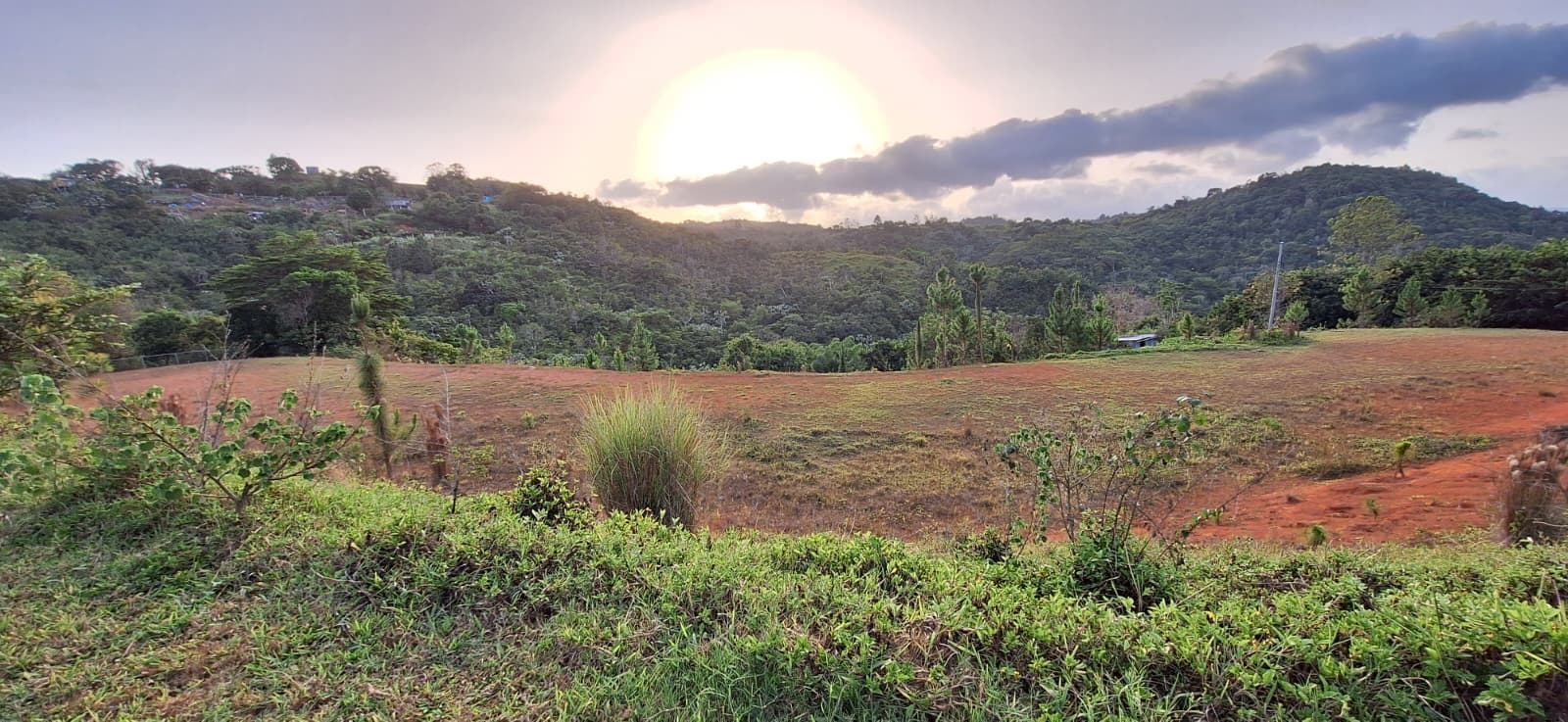
The purchase price of a Puerto Rico finca gets all the attention, but the number that decides whether owning one is pleasant or stressful is the annual carrying cost. For an improved 100-acre estate with a residence that is lived in or kept ready, a realistic range is roughly $15,000 to $70,000 a year before labor and animals, with $30,000 to $35,000 typical, and a full-time caretaker adds $25,000 to $45,000. Property tax is the smallest line. Electricity, insurance, labor and the constant upkeep of fences, roads and grounds are the big ones. This guide walks through each line with the 2026 figures and sources behind it.
The annual budget at a glance
The table below is a planning range for a 100-acre mountain property with one main residence, a second structure, perimeter fencing, internal roads and a modest number of animals. "Low" assumes an owner who does a good deal of the work and uses the house part time. "High" assumes full-time occupancy, a paid caretaker, livestock and frequent outages. Your own numbers will depend on the property, so treat this as a framework for asking the seller and your contractors the right questions.
| Line item | Low | Typical | High |
|---|---|---|---|
| CRIM property tax | $500 | $1,000 | $3,000 |
| Property and liability insurance | $2,000 | $3,500 | $7,000 |
| Electricity (LUMA) | $2,400 | $4,500 | $9,000 |
| Generator fuel and service | $400 | $1,200 | $3,000 |
| Water (AAA) and well pump upkeep | $400 | $900 | $2,000 |
| Internet (Starlink) | $840 | $1,440 | $1,560 |
| Grounds, mowing and brush clearing | $3,000 | $7,000 | $15,000 |
| Fencing and gate repairs | $1,000 | $3,000 | $8,000 |
| Internal road and drainage upkeep | $1,500 | $4,000 | $10,000 |
| House maintenance and repairs | $2,500 | $5,000 | $10,000 |
| Security monitoring | $0 | $600 | $1,500 |
| Subtotal before labor and animals | $14,540 | $32,140 | $70,060 |
| Caretaker or farm labor | $6,000 | $30,000 | $45,000 |
| Animal feed, vet and farrier | $0 | $6,000 | $20,000 |
Note that the reserve for major repairs and storm damage (covered below) sits on top of these figures.
Property tax
Property tax in Puerto Rico is assessed and billed by CRIM on valuation tables tied to the late 1950s, so bills are low relative to market value. On rural land with a residence, annual bills from a few hundred to a few thousand dollars are typical. Ask for the CRIM account number and a debt certification for each parcel, and check whether every structure on the land is on the record, because an unrecorded building can lead to a higher bill after a sale. The full mechanics are in our guide to property tax on farms and rural land.
Insurance
Insurance on a mountain residence with windstorm coverage usually runs a few thousand dollars a year, more for a large or high-value house or one with farm liability exposure. Puerto Rico carriers commonly let the policyholder choose a hurricane deductible of 2 or 5 percent of the insured limit, so the deductible on a $500,000 policy is $10,000 or $25,000. That choice moves the premium, and the deductible belongs in your storm reserve. Flood insurance is optional for most mountain properties outside mapped flood zones. Our guide to insuring rural property in Puerto Rico covers coverage and cost drivers in detail.
Electricity and backup power
Electricity is now the largest utility line for most households on the island. For October through December 2026, Puerto Rico's Energy Bureau approved a residential rate of 33.86 cents per kilowatt-hour billed through LUMA Energy, a record that followed an 18 percent quarterly increase. At that rate, a household using 600 kWh a month pays about $203, and one using 1,200 kWh (well pumps, a second house, refrigeration, a workshop) pays about $406. Rates are reset each quarter, mainly for fuel and purchased-power costs, so budget on the high side.
Mountain properties also need backup power. Outages after storms can last days or weeks at the end of long rural lines. A standby generator burns roughly 1 to 2 gallons of diesel or propane an hour under load, depending on its size and what it is powering, so a week of outages can cost a few hundred dollars in fuel. Add annual servicing. A solar and battery system reduces both the LUMA bill and the generator's run time; it is a capital cost rather than an operating one, and our guide to off-grid and self-sufficient properties explains how owners size it.
Water
Where municipal service from the Puerto Rico Aqueduct and Sewer Authority (AAA) reaches the property, the water bill for a household is modest, and AAA's rates have risen in steps in recent years. The larger costs on a finca are the well pump's electricity, occasional pump replacement, filtration and cistern cleaning. Service interruptions at elevation are common, and 2026 brought serious shortages in parts of the island, which is why a deep well and a large cistern count as real value rather than nice-to-haves. See our guide to water rights, wells and creeks for permits and franchises.
Internet
Fiber rarely reaches mountain roads, and Starlink has become the default. In 2026 Starlink's residential plans range from about $55 to $130 a month depending on the speed tier, plus a one-time equipment purchase, so internet runs roughly $700 to $1,600 a year. A second dish or a mobile backup line is a sensible addition for anyone running a business from the property. Details are in our guide to Starlink and remote work from the mountains.
Grounds, fencing and roads
This is where tropical land surprises newcomers. Pasture and verges grow year round in the mountains, where rainfall is around 100 inches a year, and brush reclaims an untended field within a season or two. A 100-acre property needs regular mowing around the house and roads, periodic brush clearing on trails and fence lines, and tree work after storms. Owners either buy a tractor and attachments and do it themselves, hire a local crew by the day, or include it in a caretaker's duties.
Fences need constant attention: posts rot, wire rusts, and falling branches open gaps. Internal roads and drainage ditches wash out in heavy rain, and a single storm can mean a load of gravel and a day of machine work. Budget something every year rather than treating these as surprises.
Caretaker and labor
Puerto Rico's minimum wage has been $10.50 an hour since July 1, 2024. Experienced estate and farm caretakers in the mountains commonly earn more than the minimum, and many arrangements combine a wage with housing when there is a second residence on the property. A full-time caretaker therefore costs roughly $25,000 to $40,000 a year in wages and employer payroll taxes, before housing. Owners who live on the property full time often get by with part-time help two or three days a week, while absentee owners usually need someone living on site for security, animals and storm response.
Animals
Horses, cattle and poultry each carry their own costs: feed and supplements, hay in the drier months, vaccinations and vet visits, a farrier every six to eight weeks for horses, and fencing suited to the stock. A small herd kept largely on pasture costs far less per head than horses kept in stalls on bought feed. Our guide to horse and equestrian properties covers equine costs in more detail.
Reserves and the costs nobody budgets
- Storm reserve. At least the hurricane deductible, plus cleanup and tree work that insurance will not cover.
- Capital replacement. Roofs, water heaters, pumps, generators, vehicles and tractors all wear out faster in heat, humidity and salt-free but constant rain. Setting aside 1 to 2 percent of the improvements' value each year is a common rule of thumb.
- Professional fees. An accountant who understands Puerto Rico returns, and legal help for permits or leases.
- Vehicles. A four-wheel-drive truck is close to essential on mountain roads.
How farming the land lowers the bill
A buyer who runs the land as a genuine agricultural business can obtain a bona fide farmer certification from the Puerto Rico Department of Agriculture. Certified farmers are exempt from property tax on land and improvements used in the farm, from municipal license tax, and from sales and excise tax on farm inputs and equipment, and pay income tax on only 10 percent of net farm income. The Department also runs incentive and subsidy programs for certified farmers, with terms and budgets that change from year to year. None of this applies to a private estate with a few animals, and the eligibility rules should be confirmed with a Puerto Rico CPA.
Example: the 100-acre Cayey estate
The estate described on this site gives a useful real-world anchor. It is about 100 acres at 2,100 feet in Cayey, with a remodeled three-bedroom residence, a second house, a gatehouse, fencing, a corral and trails. Its fixed costs are unusually favorable: CRIM property tax is about $990 a year, the MLS listing reports annual insurance of about $2,799, and there is no HOA. Water security comes from municipal service plus a 550-foot well, a 12,000-gallon cistern and two creeks; power from LUMA with a generator hookup; internet from Starlink. A new owner's main variable costs would be electricity, grounds and fencing, and whether to employ a caretaker. The property is offered for sale at $2,375,000, reduced from $2,500,000, on a furnished long-term lease at $15,000 per month, or as a lease with option to buy. Photographs and details are on the main page, and you can ask the owner for current utility bills during a visit.
Frequently asked questions
How much does it cost per year to own a 100-acre farm in Puerto Rico?
What is the electricity rate in Puerto Rico?
Is property tax really under $1,000 a year on 100 acres?
How much does a caretaker cost in Puerto Rico?
What do insurance and a generator add?
Which costs are reduced by farming the land?
Sources and further reading
- New record energy rate in Puerto Rico: 18 percent increase brings the kilowatt-hour to 33.86 cents, El Nuevo Día, October 2026.
- Puerto Rico increases hourly minimum wage to $10.50 beginning July 1, 2024, JD Supra.
- What is a deductible?, Triple-S Propiedad, on 2 and 5 percent hurricane deductibles.
- Starlink 2026 price increase, SatelliteInternet.com.
- MLS listing for the Cayey estate, Nest Seekers, for reported annual taxes and insurance.
- Act 67-2025, on the bona fide farmer certification and exemptions.
These figures are planning ranges, not quotes. Utility rates, wages, insurance premiums and plan prices change, and every property is different; obtain current bills from the seller and quotes from local contractors, insurers and a Puerto Rico CPA before relying on any number here. Figures for the Cayey estate are provided by the owner and the MLS listing and should be independently verified.