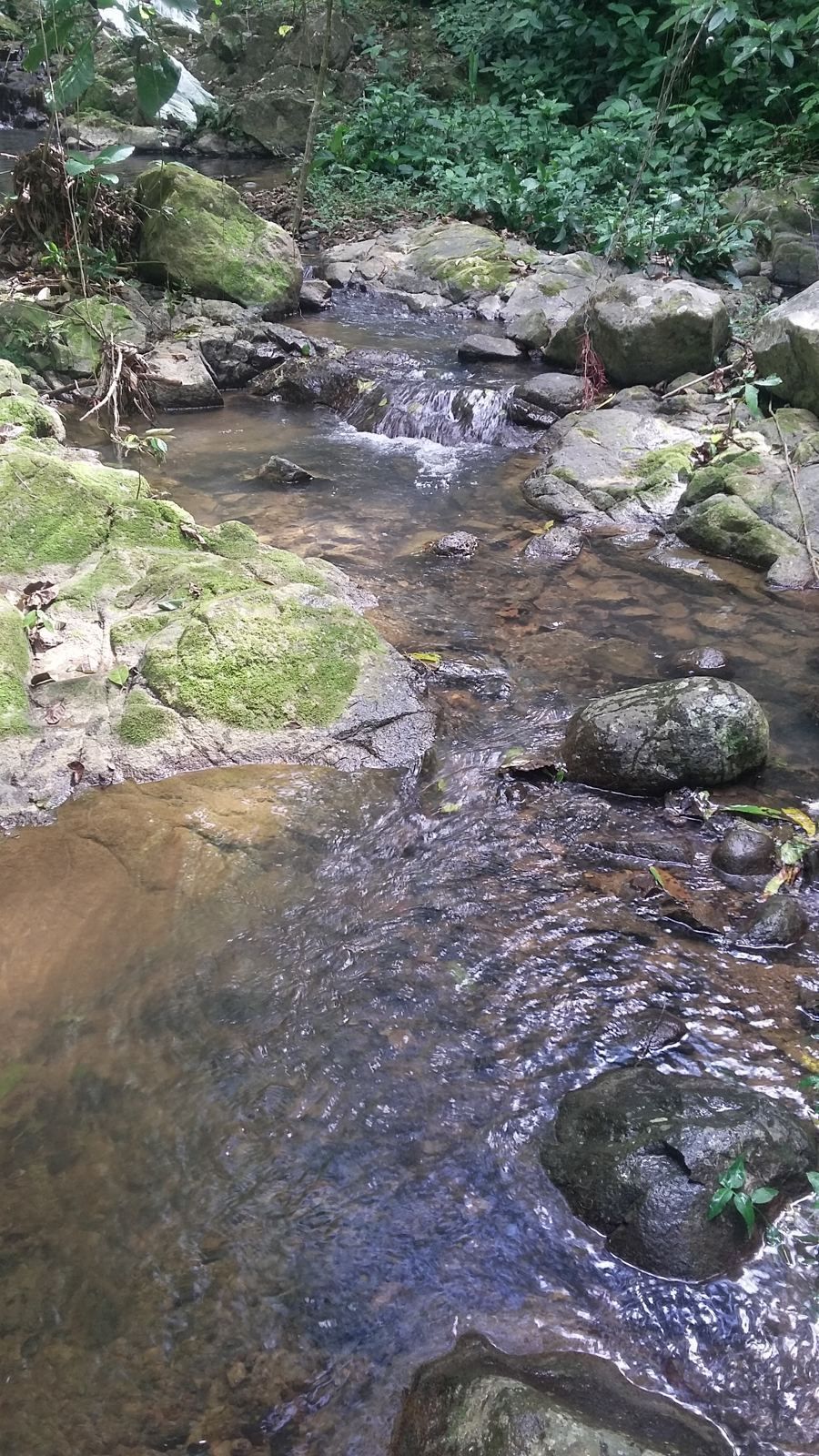
On a mountain farm in Puerto Rico, water is the asset that decides everything else: whether the house is livable through a drought, whether the pasture can carry horses, whether a retreat or a nursery is viable. Buyers often assume that a well or a creek on the land comes with the right to use it. In Puerto Rico it does not, at least not automatically. All water belongs to the public, and using it is governed by the 1976 Water Law and the regulations of the Department of Natural and Environmental Resources (DRNA). This guide explains how that works in practice and what to check before you buy.
The basic rule: water is public
Puerto Rico's Water Law, Act 136 of June 3, 1976, declares that all waters and water bodies on the island are the property and wealth of the People of Puerto Rico, and names the Secretary of the DRNA as their custodian. Groundwater under your land, a creek that crosses it and a spring that rises on it are all covered. Ownership of the land gives you physical access; it does not give you a private property right in the water.
Three other principles from the same law shape every decision the DRNA makes. Domestic use, and above all human consumption, has priority over every other use. Uses that were beneficial and reasonable when the law took effect in 1976 are protected as acquired rights, although the Secretary can recognize a smaller quantity than the holder claims. And water rights cannot be acquired by prescription: using a spring for forty years without authorization does not make the use legal.
Four water sources on a rural property
- Municipal water from the Puerto Rico Aqueduct and Sewer Authority (AAA). A utility account like any other, with no DRNA franchise involved.
- A well, drawing groundwater. Requires a DRNA construction permit and, to extract water, a franchise.
- Surface water: creeks (quebradas), rivers, springs (manantiales) and ponds. Diverting or pumping it is a regulated use.
- Rainwater collected from roofs into cisterns. Not subject to a franchise.
Well-run mountain properties usually combine several of these, with municipal water or a well as the primary supply and a large cistern as storage, so that an interruption in one source does not leave the house dry.
Wells: construction permits and franchises
A well involves two separate authorizations from the DRNA. The first is a permit to construct the well, issued to a licensed well driller for a specific location and design. The second is a water franchise (franquicia de agua) authorizing extraction of a stated quantity, at a stated rate, for a stated use. The Water Law caps the duration of permits at two years and franchises at ten, with the specifics set by regulation, and requires that any authorization serve the public interest, avoid waste, respect priorities and not impair existing rights. Transfers of a franchise also require DRNA approval, which matters when you buy a property that already has one.
According to reporting in August 2026, a franchise application includes the application form, proof of title or lease, a sworn statement on the well's origin, a diagram of the system, a location sketch and topographic map, an estimate of consumption, and, for most household uses, a certification from the AAA discussed below. The DRNA has said processing takes 60 to 90 days, with a very small staff handling wells across the island. Drilling a residential well was reported at roughly $2,000 to $5,000, with deeper wells and agricultural or commercial systems costing considerably more, and the water must be tested to confirm it is fit for drinking; filtration is recommended even for clean groundwater.
The AAA rule: why a well franchise can be refused
This is the point that surprises most mainland buyers. Under the DRNA's water regulation, where the AAA provides satisfactory service, a franchise for household use generally will not be granted. The logic is that groundwater is reserved for uses and places the public system does not serve. The application therefore includes an AAA certification that service at the property is absent or unsatisfactory.
There are important exceptions. Agricultural and livestock use is an eligible category, as are certain institutional, industrial and commercial uses where water is inherent to the activity, and rights acquired before June 3, 1976. During AAA rationing in a drought or emergency, the DRNA may allow extraction systems to operate for the duration, although for households that relief has been limited to community systems serving two or more families. For a farm buyer, the practical upshot is that a well serving the agricultural operation is on firmer ground than a well serving only the house on a road with good AAA service. Get the classification right in the application.
Meters, reporting, fees and penalties
- Meters. Each franchised well must have a meter.
- Reporting. Owners report extraction and water levels monthly, and renewals require proof, such as meter readings or photographs.
- Fees. Permit fees reported in 2026 were about $100 for domestic use, $200 for a general permit and $750 for a special artesian well permit. Extraction fees apply to most franchise holders, with bona fide farmers reported as exempt.
- Penalties. Unreported or unauthorized extraction can bring fines reported at up to $50,000, loss of the right to use the well, and payment for the water taken. The DRNA has issued fines for illegal wells in agricultural regions.
Fee schedules change, so confirm current amounts with the DRNA or your attorney rather than relying on these figures.
Creeks, springs and ponds
A creek running through the property is one of the most valued features on a mountain finca, for livestock, irrigation, scenery and simple pleasure. Legally, surface water is public in the same way groundwater is, and the Water Law provides a franchise system for its use. Watering animals that walk down to the creek, or enjoying a swimming hole, is not the same thing as installing a pump or a diversion pipe to irrigate a field or supply a house. The latter is a use that normally requires a franchise. The law lets the Secretary waive the administrative process and fees for domestic or agricultural uses that do not involve a considerable volume of water, which is how many small farms operate, but a waiver is the Secretary's decision, not the owner's.
Streams also bring setbacks. Construction, clearing and fill near watercourses are restricted under environmental and zoning rules, and flood zones along rivers are mapped by FEMA. Mountain creeks near their headwaters are rarely a flood risk to a house set well above them, but the setback still applies to anything built nearby. See Puerto Rico zoning codes for rural land for how protected areas are classified.
Rainwater and cisterns
Rainwater harvesting is legal, unregulated by any franchise, and close to universal on rural properties. Cayey averages around 100 inches of rain a year, so a modest roof collects an enormous amount of water. Cisterns are sized for storage rather than daily supply: a household typically wants enough to bridge the multi-day or multi-week interruptions in AAA service that follow major storms or drought rationing. A 12,000-gallon cistern carries a careful household for weeks, and longer with a well or creek to top it up. The Water Law even directs the DRNA to provide free model plans for small rainwater works such as tanks, ponds and reservoirs for domestic and agricultural use.
Two practical notes: cistern water for drinking should be filtered and treated, and the cistern itself should be inspected for cracks and contamination as part of due diligence, since an underground tank is easy to overlook.
Drought, rationing and storms
Puerto Rico's reservoirs are shallow and silt up, and dry years bring AAA rationing that can leave rural roads with water on alternating days. After Hurricane María in 2017, many mountain communities went weeks without public water. Both experiences explain why buyers increasingly ask about water redundancy first. A property with municipal service, a permitted well, a creek and a large cistern can ride out conditions that would empty a house relying on the public system alone. When you compare properties, count the sources and the storage, not just the presence of a water meter. For the power side of the same question, see off-grid and self-sufficient properties in Puerto Rico.
What to verify before you buy
- AAA service. Ask for the account and recent bills, and ask neighbors how reliable service is in dry months.
- Well paperwork. The construction permit, the franchise (if any) with its authorized use and quantity, the meter, and recent extraction reports. Ask whether the franchise can be transferred to you and what the DRNA requires.
- Well performance. Depth, static water level, yield, pump size and age, and a recent water quality test from a certified laboratory.
- Surface water use. How creeks and springs are used today, and whether any pump or diversion is authorized.
- Storage. Cistern capacity, construction and condition, and how it is filled.
- Title. Any recorded water easements, such as a neighbor's right to a spring, in the title study.
- Intended use. If you plan irrigation, livestock at scale or guest lodging, have the water plan reviewed against the DRNA rules before you commit.
Example: a mountain estate with four sources
The estate described on this site, about 100 acres at roughly 2,100 feet in Cayey, has all four sources: municipal AAA water, a 550-foot well, two natural creeks and a 12,000-gallon cistern, along with a generator hookup and Starlink internet. The land carries A-G agricultural zoning, previously supported horses, cattle and chickens, and pays about $990 a year in property tax. The estate is for sale at $2,375,000, reduced from $2,500,000, on a furnished long-term lease at $15,000 per month, or as a lease with option to buy. See the main page for photographs and details, and use the inquiry form to ask questions or arrange a visit.
Frequently asked questions
Who owns the water on my land in Puerto Rico?
Do I need a permit to drill a well in Puerto Rico?
How much does it cost to drill a well in Puerto Rico?
Can I use the creek or spring on my property?
Is rainwater harvesting legal in Puerto Rico?
What should I check about water before buying rural land?
Sources and further reading
- Act 136 of June 3, 1976, Ley para la Conservación, el Desarrollo y Uso de los Recursos de Agua de Puerto Rico, as amended (Puerto Rico Aqueduct and Sewer Authority).
- P.R. Laws tit. 12, § 1115h, Permits and franchises.
- ¿Son los pozos una opción para aliviar la crisis del agua?, Primera Hora, August 2026, on DRNA well franchises, fees, documents and penalties.
- DRNA emite 28 multas en Salinas por supuestos pozos ilegales, Metro Puerto Rico.
- Introducción a la acuaponía: reglamentación, University of Puerto Rico at Mayagüez, on water sources, franchises and rainwater.
This article is general information, not legal advice. DRNA regulations, eligibility rules and fees change; confirm requirements for any well, diversion or franchise with the DRNA and a Puerto Rico attorney before purchasing or drilling. Information about the Cayey estate is provided by the owner and should be independently verified.