Insuring a mountain estate in Puerto Rico is less mysterious than mainland buyers fear. Windstorm coverage is available from local carriers, most mountain land sits outside mapped flood zones, and a well-built concrete house at elevation is a better risk than a beachfront condo. The details that matter are the hurricane deductible, which is usually a percentage of the insured value, the gap between wind and flood coverage, and liability if you farm or host guests. This guide covers each, with what a 100-acre estate actually pays as an example.
The Puerto Rico insurance market after María
Hurricanes Irma and María in 2017 were the most expensive insured event in Puerto Rico's history and tested every carrier on the island. The market that emerged is more concentrated in local companies and more heavily reinsured. According to AM Best, unaffiliated insurers domiciled in Puerto Rico wrote 78 percent of net property premiums in 2023, up from 68 percent in 2018, net written premiums have grown about 6 percent a year since 2017, and the premiums those carriers cede to global reinsurers have more than doubled. When Hurricane Ernesto struck in 2024, AM Best expected the island's insurers to absorb the losses within their reinsurance programs.
For a buyer, the practical result is that coverage is available, mostly through local carriers and agents, and priced to reflect real hurricane risk. Shopping through a Puerto Rico broker who places with several companies is the norm.
What a standard property policy covers
A homeowners or dwelling policy in Puerto Rico typically covers:
- The dwelling, insured for its replacement cost or agreed value.
- Other structures: a second house, gatehouse, barns and garages, often as a percentage of the dwelling limit or scheduled separately.
- Contents, which matters if the house is sold or leased furnished.
- Windstorm and hurricane, usually included but subject to a separate hurricane deductible.
- Personal liability for injuries to others on the property.
Two common gaps: flood and storm surge are excluded from standard policies and require separate flood insurance, and earthquake coverage, relevant since the 2020 southwest earthquakes, is usually an endorsement. Fences, roads, crops and livestock are generally not covered under a homeowners form and need farm coverage if they matter to you.
Hurricane deductibles: 2 percent or 5 percent
This is the number most likely to surprise a mainland buyer. Rather than a flat dollar deductible, Puerto Rico property policies commonly carry a hurricane deductible equal to a percentage of the insured limit. Triple-S, one of the island's largest carriers, describes the choice as 2 or 5 percent. On a house insured for $500,000, that is a $10,000 or $25,000 deductible per hurricane, applied before the policy pays anything for hurricane damage. The 5 percent option lowers the premium; the 2 percent option lowers your exposure. Whichever you choose, keep at least the deductible amount in a storm reserve, along with funds for tree removal and road clearing that insurance will not reimburse. Our guide to what a finca costs to run builds this into an annual budget.
Flood insurance and why zone X matters
Flood coverage in Puerto Rico comes mainly from the federal National Flood Insurance Program, which FEMA administers and private carriers write. Whether you need it depends on the FEMA flood zone of the structure, not just the land. Most mountain homes sit in zone X, outside the mapped 100-year floodplain, where flood insurance is optional and comparatively inexpensive. Homes in zone A or AE, typically in valley bottoms or beside rivers, carry higher flood risk, and any federally backed mortgage on them requires flood insurance.
On a large rural parcel, the flood map can show zone A along a creek while the house on the ridge is zone X. Check the zone for each building on FEMA's map, and remember that in the mountains the more relevant water hazards are landslides and road washouts, which neither homeowners nor flood policies cover in most cases. Siting, drainage and a second route off the property matter more than a flood policy for a ridge-top house.
Liability for farms, horses and guests
Liability is where rural property differs most from a house in town. A homeowners policy's liability coverage is written for personal use. If you run a farm, board horses for others, sell produce, host retreats, rent cabins or have employees, you need coverage written for those activities:
- Farm liability for agricultural operations, including livestock that escape onto a road.
- Equine liability if you keep horses for others or offer riding. See our guide to horse and equestrian properties.
- Commercial general liability for eco-tourism, events or lodging.
- Workers' compensation, which in Puerto Rico is provided by the State Insurance Fund Corporation (CFSE) and is required for employees, including a caretaker.
- Umbrella coverage above the primary limits, which is inexpensive relative to the protection it adds.
What drives the premium
- Construction. Reinforced concrete walls and a concrete roof are the Puerto Rico standard and price best. Wood frame, zinc roofs and large glass areas cost more to insure.
- Replacement cost. Insured value, not market value, drives the premium. On rural land, market value is mostly the land, which you do not insure.
- Hurricane deductible choice. 5 percent costs less than 2 percent.
- Protective features. Hurricane shutters or impact windows, a generator, a monitored alarm and a nearby fire station can earn credits.
- Elevation and exposure. Ridge-top sites take more wind but avoid surge and riverine flooding.
- Occupancy. A vacant or seasonal house, or one rented to others, prices differently from an owner-occupied primary home.
- Claims history and roof age. As anywhere, these matter.
Mortgages, lenders and required coverage
A lender financing a purchase will require property coverage including wind, with the lender named as mortgagee, and flood coverage if the house is in a special flood hazard area. Sellers offering owner financing will usually require the same, and a lease with option to buy will normally have the owner insure the structures and the tenant insure contents and liability. Our guides to owner financing and lease with option to buy cover who pays what.
Making a claim after a storm
After María, many claims took months or years to settle, and Puerto Rico's insurance code now sets duties and deadlines for adjusting property claims. Practical habits make a claim smoother: photograph and video the property, inside and out, at the start of each hurricane season; keep the policy, receipts and inventory in the cloud; mitigate damage promptly and keep receipts; and report the loss in writing as soon as you can. The Office of the Commissioner of Insurance (OCS) handles complaints against carriers.
Example: what a 100-acre Cayey estate pays
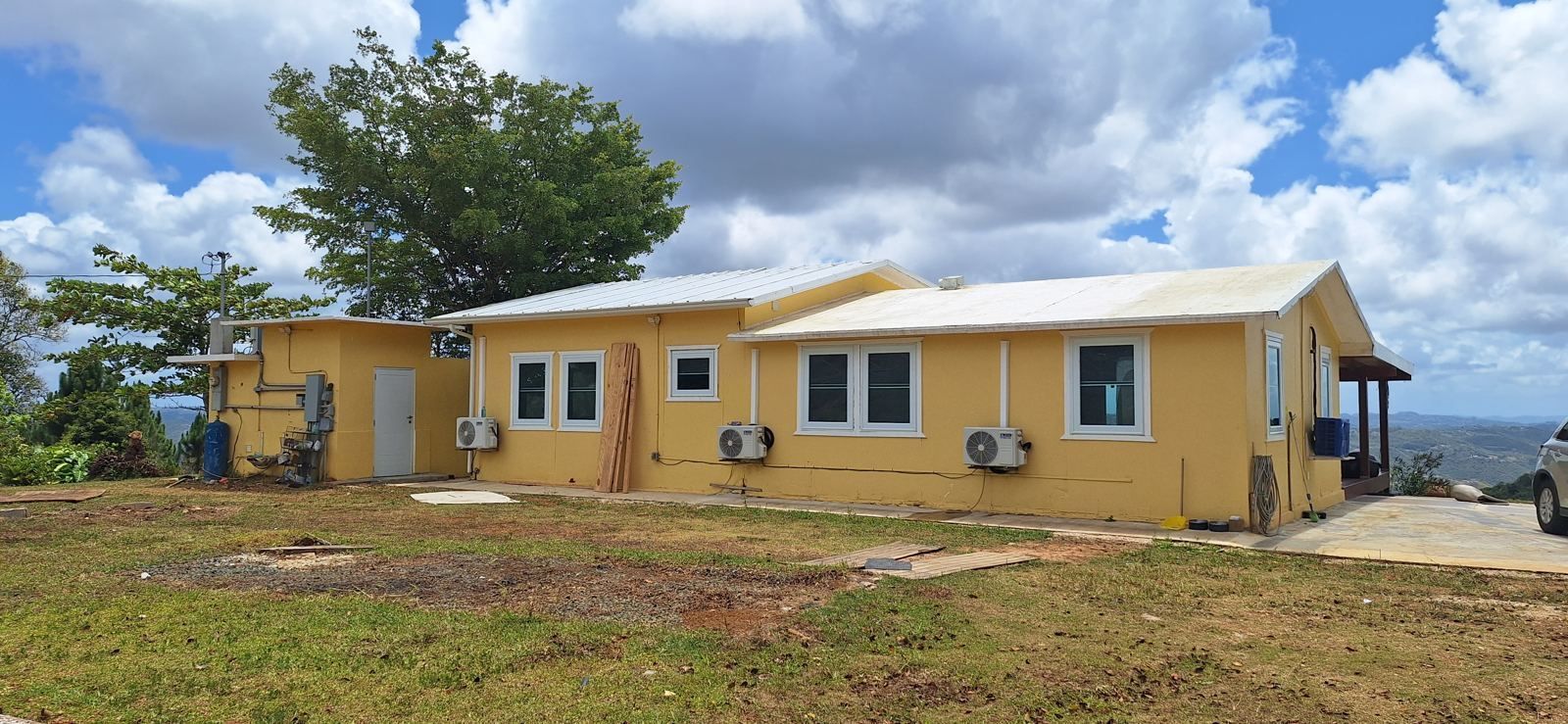
The estate described on this site, about 100 acres at 2,100 feet in Cayey with a remodeled three-bedroom residence, a second house and farm structures, reports annual insurance of about $2,799 on its MLS listing. Its fixed costs are otherwise light: about $990 a year in property tax and no HOA. The house sits on high ground above the creeks, with a generator hookup, remotely monitored cameras and alarm, and water security from a 550-foot well and a 12,000-gallon cistern. A buyer who farms, boards horses or hosts guests would add farm or commercial liability on top of that figure. The property is offered for sale at $2,375,000, reduced from $2,500,000, on a furnished long-term lease at $15,000 per month, or as a lease with option to buy. See the main page for details, and request the current policy declarations as part of your due diligence.
Frequently asked questions
Is hurricane insurance available in Puerto Rico?
How does the hurricane deductible work in Puerto Rico?
Do I need flood insurance on a mountain property?
Does homeowners insurance cover a farm or horses?
How much does it cost to insure a mountain estate in Puerto Rico?
Are landslides covered?
Sources and further reading
- Puerto Rico insurers to absorb Hurricane Ernesto losses: AM Best, Insurance Journal, August 2024.
- What is a deductible?, Triple-S Propiedad.
- Puerto Rico and the federal flood insurance Risk Rating 2.0, Flood Insurance Guru.
- MLS listing for the Cayey estate, Nest Seekers, for reported annual insurance and taxes.
This article is general information, not insurance or legal advice. Coverage terms, deductibles, exclusions and prices vary by carrier and change over time; obtain quotes and policy wording from a licensed Puerto Rico insurance broker. The insurance figure for the Cayey estate is from its MLS listing and should be independently verified.