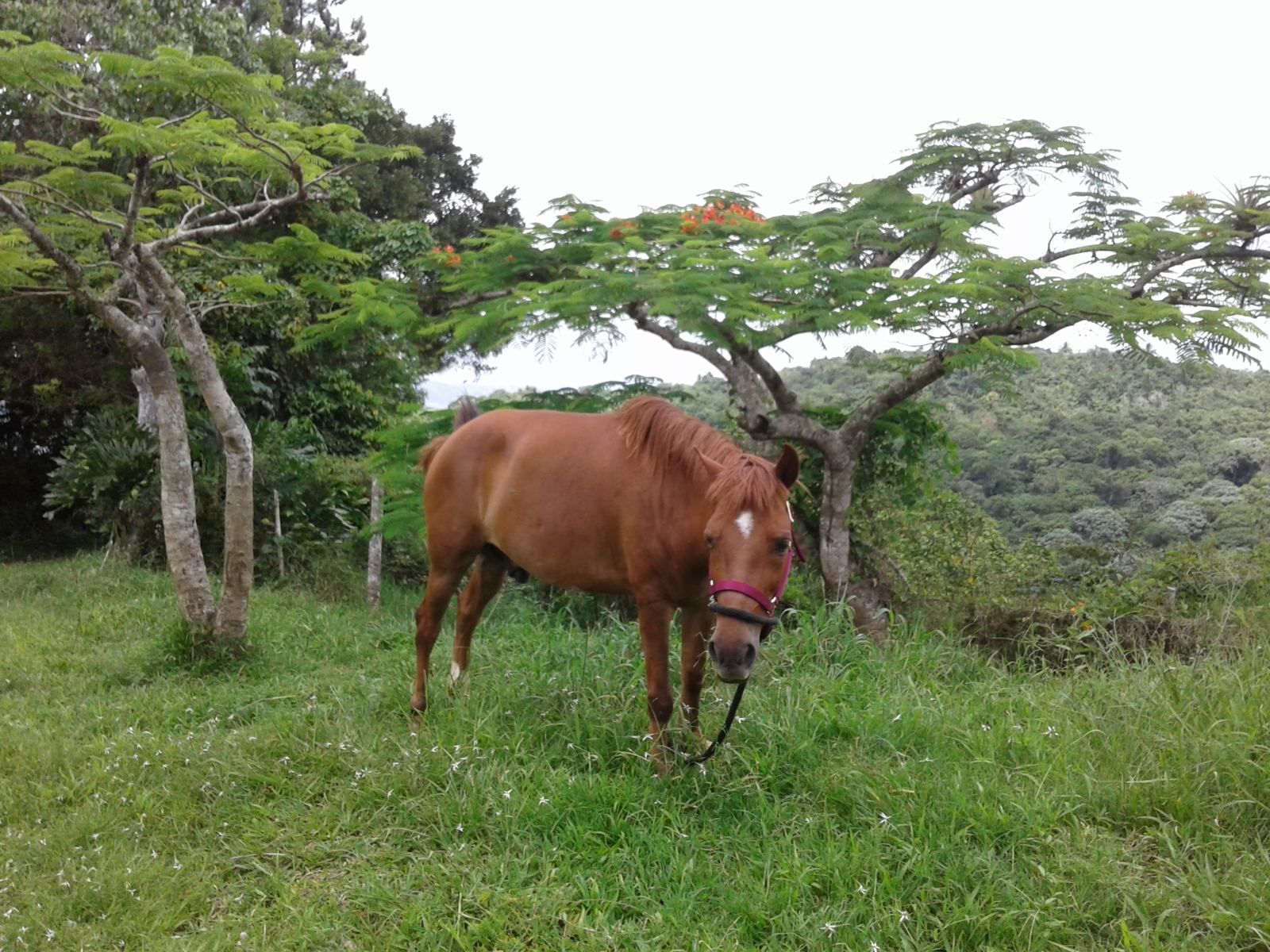
A good horse property in Puerto Rico comes down to five things: enough usable, well-drained pasture on slopes a horse can graze safely, a reliable water supply that keeps running when the power does not, shade and shelter from both sun and storms, a plan for feed when local hay runs short, and a vet and farrier within reasonable reach. The island has a deep horse culture, centered on the Paso Fino, but its terrain, climate and hurricane season make it a different proposition from buying horse acreage in Florida or Kentucky. This guide covers what to look for and what to ask.
Horse culture in Puerto Rico
Horses arrived in Puerto Rico with the Spanish in the first decades of the 1500s, and over five centuries of breeding for a smooth ride the island produced its own horse: the Puerto Rican Paso Fino. Its signature is a four-beat lateral gait so even that a rider can carry a glass without spilling it, performed at three speeds known as fino, corto and largo. Competitions were recorded as early as the mid-1800s, a federation and registry were established in 1943, and in 2023 the legislature declared the purebred Puerto Rican Paso Fino part of the island's national and cultural heritage (Act 34-2023).
That heritage is visible on any weekend. Trail rides (cabalgatas) fill rural roads, Paso Fino shows run through the year, and Thoroughbred racing continues at Hipódromo Camarero near San Juan. Alongside them are Quarter Horses, riding schools, criollo working horses on cattle farms, and a growing number of horses kept simply for trail riding on private land. For a buyer, this means an established network of trainers, farriers, feed stores and equine vets, concentrated around the metro area and the larger agricultural towns, and a local market that understands and values a well set up horse property.
Land and pasture: slope, drainage and grass
Most large private acreage in Puerto Rico is in the mountains, and mountains mean slope. Horses can graze moderate slopes comfortably, and hill pasture builds condition, but steep, wet ground causes injuries and erosion. When you walk a property, look for:
- Usable acreage, not total acreage. A 50-acre finca with 15 acres of open, rolling pasture may carry more horses than a 100-acre parcel that is mostly forested ravine. Ask the seller how many horses the land has actually supported, and for how long.
- Drainage. Mountain areas such as Cayey receive roughly 100 inches of rain a year in long-term averages. Pasture that sheds water quickly and does not hold mud through the wet season (roughly May to November) protects hooves and reduces thrush and rain rot.
- Existing grass cover. Established tropical pasture grasses recover quickly with rotation. Overgrazed red clay does not. Rotational grazing across several fenced paddocks is the norm on well run properties and is worth paying for if it is already in place.
- Shade. Mature trees in or along pastures matter in a climate where sun is intense year round, even at elevation.
- Elevation and temperature. Higher properties run noticeably cooler than the coast, which reduces heat stress and insect pressure. It is one reason horse owners favor the central mountains.
Water: the non-negotiable
An adult horse drinks a substantial volume of water every day, more in heat and work, and a horse property must be able to deliver that every day of the year, including after a hurricane and during drought. Rural Puerto Rico properties typically rely on some combination of municipal water from the Aqueduct and Sewer Authority (AAA), a drilled well, creeks or springs, and stored water in a cistern. The best horse properties have more than one source and enough storage to ride out an interruption. Verify each in writing: the AAA account and pressure at the barn, the well depth, yield and pump, whether the pump can run on a generator or solar, and cistern capacity. Creeks are a bonus for grazing horses but should not be the only source, since they can run low in dry spells and carry contamination after heavy rain. Using well or surface water beyond basic domestic use can also require a franchise from the Department of Natural and Environmental Resources (DRNA), which is worth confirming as part of due diligence.
Drought is a real consideration. In August 2026 the Department of Agriculture reported about 80 percent of the island in drought conditions, with the south hit hardest. Mountain properties generally fare better than the south coast, but water security is the first thing to underwrite.
Feed and hay: plan for shortages
Puerto Rico produces some hay locally, much of it in the south and west, and imports the rest by container. Both sources are vulnerable. After Hurricane Fiona in 2022, flooding in the western agricultural zone halted local hay production for months and the racetrack community relied on imported Coastal Bermuda shipped from the mainland. In the 2026 drought, local press reported hay bale prices rising from roughly $4 to $5.50 a bale to $7 to $9, with warnings of further increases if dry conditions continued.
The practical lessons for a buyer are to favor land that can carry its horses largely on pasture for most of the year, to have dry, ventilated storage for several months of hay and bagged feed, and to identify more than one supplier before you need them. Owners with enough open ground sometimes cut their own forage, which gives the most independence of all.
Fencing, shelter, corrals and access
- Perimeter and paddock fencing. Check the type, condition and whether it is horse-safe. Barbed wire common on cattle farms is a hazard for horses. Termites and humidity shorten the life of wood posts, so look at what is underneath.
- Shelter. Run-in sheds or stables with good ventilation, solid roofs and tie-downs that can withstand high winds. In the tropics, shade and airflow matter more than enclosure for most of the year.
- Corral and working area. A corral for handling, farrier and vet visits, and loading is essential. An arena or a flat riding area is a plus on mountain land, where level ground is scarce.
- Trails. Internal trails, bridges over creeks and safe footing turn a large property into a private riding preserve, which is a large part of the appeal of mountain land.
- Trailer access. Make sure a truck and trailer can actually reach the barn and turn around, including after rain. Narrow, steep mountain roads are routine in Puerto Rico and should be tested in person.
- Security. A gated entrance and cameras protect horses and tack, particularly on properties the owner does not occupy full time.
Vets, farriers and moving horses to the island
Equine veterinarians, farriers and trainers practice across the island, with the deepest bench around the San Juan metro, the racetrack and the larger agricultural towns. Before buying, ask the seller and neighbors who they use, whether those providers make farm calls to that location, and how far it is to the nearest practice able to handle emergencies. Hurricane María in 2017 showed how much veterinary capacity depends on power, roads and fuel, so a property with good access and its own backup power is easier to service in a crisis.
If you plan to bring horses from the mainland, expect interstate health paperwork, a negative Coggins test and ocean or air transport, with requirements set by the Puerto Rico Department of Agriculture and USDA. Rules change, so confirm current requirements with an experienced equine shipper and your vet well before the move.
Hurricane planning for horses
Hurricane season runs from June through November. A horse property should be judged partly on how it performs in a storm and in the weeks after. Before María, hundreds of horses were moved to the racetrack for shelter, and in the aftermath some went without food and water when caretakers could not reach them. The properties that came through best had:
- Pasture on high ground away from creeks that flood, with trees and structures that will not become debris hazards.
- Water storage and a pump that can run without grid power.
- Several weeks of hay and feed stored dry and secured.
- Identification on every horse, current health records off-site, and a caretaker who can reach the farm.
- A cleared, maintained access road and, ideally, a second way out.
Zoning and running horses as a business
Keeping horses for personal use is generally compatible with agricultural districts such as A-G (Agrícola General). A boarding stable, riding school, trail-ride business, breeding operation or equine veterinary practice is a commercial or agricultural business use, and whether it is permitted as of right, permitted with conditions or requires a consultation depends on the parcel's district and the municipal plan. Check this before buying if the business is part of your plan; our guide to Puerto Rico zoning codes for rural land explains how. An operation that qualifies as a bona fide agricultural business may also be eligible for the farm tax incentives described in our property tax guide, and guided rides on a working farm can fall under the Tourism Company's agrotourism certification, covered in our eco-lodge and agrotourism guide.
A worked example: 100 acres in Cayey
The estate this site describes was home to about a dozen horses and other livestock, and shows how the checklist applies. It is about 100 acres in two fee-simple parcels at roughly 2,100 feet in Cayey, with open rolling pasture, mature shade trees, a cattle corral, perimeter fencing, internal trails with footbridges and a summit lookout. Water comes from municipal AAA service, a 550-foot well, a 12,000-gallon cistern and two year-round creeks, and there is a generator hookup and Starlink internet. The land is zoned A-G agricultural with a B-Q district that also permits equestrian, veterinary and eco-tourism uses, a gated entrance with a guard house controls access, and annual property tax is about $990. The remodeled three-bedroom main house overlooks the pasture, and a second residence suits a caretaker or trainer.
The property is offered for sale at $2,375,000, reduced from $2,500,000, on a furnished long-term lease at $15,000 per month, or as a lease with option to buy (Stellar MLS PR9124119). See the photographs and full details on the main page, or schedule a private visit. For current comparables, see mountain farms and estates for sale in Puerto Rico, and for the purchase process, how to buy land in Puerto Rico from the mainland.
Frequently asked questions
How many acres do I need per horse in Puerto Rico?
What is a Paso Fino?
Is hay expensive in Puerto Rico?
Can I run a boarding or trail-riding business on agricultural land?
What is the most important thing to check on a horse property?
How do I bring horses from the mainland to Puerto Rico?
Sources and further reading
- Paso Fino, Wikipedia, on the breed's origin, gaits and the 1943 registry.
- Act 34-2023, declaring the Purebred Puerto Rican Paso Fino Horse national and cultural heritage (Government of Puerto Rico).
- Hay shortage in Puerto Rico due to Hurricane Fiona, Equibase.
- La sequía que estrangula la agricultura puertorriqueña, Metro Puerto Rico, August 2026, on drought conditions and hay prices.
- Industry groups join forces to help Puerto Rican racehorses, The Horse, on conditions after Hurricane María.
This article is general information for prospective buyers, not veterinary, legal or tax advice. Animal import rules, zoning and incentive requirements change; confirm current requirements with a Puerto Rico veterinarian, attorney or planner before purchasing. Information about the Cayey estate is provided by the owner and should be independently verified.