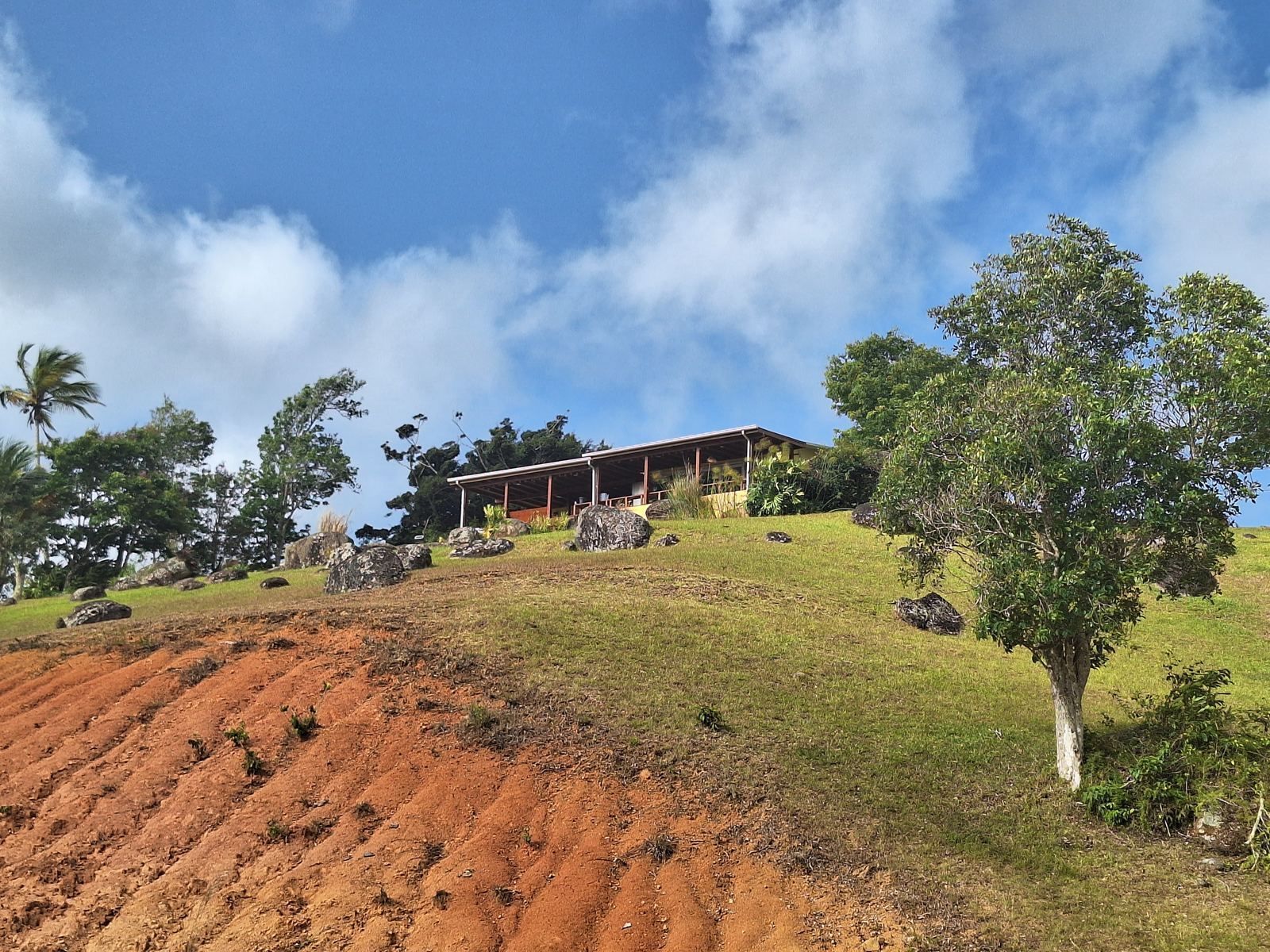
Yes, a farm or mountain estate can satisfy the Act 60 real estate requirement, as long as it includes a house you actually live in as your principal residence and the title is held the right way. Acreage, agricultural zoning and distance from San Juan do not disqualify it. What matters is when you buy, how title is held, and whether your life on the island holds up under the federal bona fide residency tests. This guide covers the requirement, how rural property fits it, and what Act 38-2026 changed for anyone applying now.
What the residence requirement says
Act 60-2019, the Puerto Rico Incentives Code, consolidated the old Act 22 into Chapter 2, the Individual Resident Investor program. A decree under that chapter can exempt Puerto Rico-source interest, dividends and capital gains that accrue after the holder becomes a bona fide resident, for as long as the decree is in force and its conditions are met. One of those conditions, added when Act 60 replaced Act 22, is a real estate purchase: a decree holder must buy residential property in Puerto Rico to serve as their principal residence within two years of the decree being granted. Renting, however long and however expensive, does not satisfy it.
The requirement is a condition of the decree, not a one-time box to tick. The holder reports on it in the annual report filed with the Department of Economic Development and Commerce (DDEC), and the property is expected to remain the principal residence. Selling it and moving into a rental while keeping the decree is the kind of change to discuss with your Act 60 attorney before you make it, not after.
Does a farm or rural estate qualify?
The test is residential use as a principal residence, not the type of neighborhood. A remodeled farmhouse on 100 acres of A-G agricultural land in the mountains is a residence in exactly the same sense as a condo in Condado. Neither the Incentives Code nor DDEC's published guidance limits the requirement to urban property, to a particular price, or to land zoned residential.
Three practical points still apply:
- There has to be a house, and you have to live in it. Vacant land does not meet the requirement until a dwelling is built and occupied. If you plan to build, the two-year clock runs while you permit and construct, and mountain construction in Puerto Rico rarely finishes quickly.
- The house should be legal. An older finca may have a second house or additions that were never permitted. That does not usually matter for the main residence if it is properly recorded, but your attorney should confirm the dwelling you are relying on is in the Property Registry and on the CRIM tax record.
- Agricultural use around the house is fine. Running cattle, horses or crops on the surrounding land does not change the character of the residence. It may even let the operation qualify separately for the bona fide farmer incentives described in Property tax on farms and rural land in Puerto Rico. That is a different chapter of the Code with its own rules, and it should be structured alongside the decree, not instead of it.
Confirm the specific property with a Puerto Rico Act 60 attorney before you sign a purchase contract. The answer for an ordinary estate with a lived-in house is almost always yes, but the attorney who files your annual reports should be the one saying so.
How title should be held
The rule depends on when the decree application is filed. For applications filed on or after January 1, 2027, Act 38-2026 requires the residence to be registered in the decree holder's name, jointly with a spouse, or in the name of a qualifying trust, so an LLC or corporation will not satisfy it. According to DDEC's April 2026 bulletin, applications filed before 2027 and decrees already approved may still hold the residence through an eligible Puerto Rico entity. That matters on rural property more than on a condo, because buyers of large acreage often want an entity to hold the land for liability or farming reasons.
The usual solution is to separate the two. If the estate is held as more than one recorded parcel, the parcel with the residence can be titled to the decree holder and the agricultural land to an entity. If it is one parcel, a segregación can create that split, but it takes Planning Board or municipal approval, a survey and new deeds, which is time you should build into the two-year window. Discuss the structure with counsel before closing; retitling afterwards costs stamps and recording fees twice.
What changed in 2026: Act 38-2026
In March 2026 Puerto Rico enacted Act 38-2026, the most significant change to the individual investor program since 2019. As summarized by the law firms and DDEC publications listed in the sources below, the main points for a prospective buyer are:
- The program was extended. Decrees can now run through 2055, replacing the earlier 2035 horizon.
- The 0 percent rate has a cutoff. Applications submitted on or before December 31, 2026 keep the 0 percent Puerto Rico rate on covered passive income. Applications submitted from January 1, 2027 receive a 4 percent rate instead, which is still far below federal and most state rates on investment income.
- Existing decrees are not affected. Holders of decrees already granted keep their terms.
- Eligibility was tightened for new applicants. Applicants filing on or after January 1, 2027 must not have been Puerto Rico residents at any time in the six years before their application. Applications filed by December 31, 2026 remain under the earlier test, which looks at residency between 2006 and 2012. New applicants also face a 5 percent rate on certain pre-residency long-term gains recognized after the move.
- The real estate requirement stayed. We found nothing in the published summaries that removes or shortens the two-year residence purchase.
The December 31, 2026 cutoff is why Puerto Rico's luxury market saw a rush of applications and purchases in late 2026. The cutoff applies to the decree application, not to the property purchase. Someone who files by the deadline still has two years from the decree to buy, which leaves time to lease first, as discussed below.
The recurring obligations
- Annual charitable contribution of $10,000, split between DDEC-approved nonprofits, including organizations that work against child poverty, as set out in DDEC's circular letters. Legislation to raise the amount has been proposed in the past; check the current figure before you budget.
- Annual report to DDEC, with a filing fee that practitioners report as $5,000, plus the professional fees to prepare it.
- Puerto Rico and federal tax filings every year, including Form 8898 with the IRS in the year you become a bona fide resident.
- Property costs, which on a rural estate are mostly operating costs rather than tax: CRIM property tax in Puerto Rico is low by mainland standards, while insurance, utilities, grounds and staff are the real budget items.
Bona fide residency and a mountain home
The decree only works if you are a bona fide resident of Puerto Rico under federal law. The IRS applies three tests, explained in Publication 570 and the Form 8898 instructions: a presence test, usually met by spending at least 183 days a year on the island; a tax home test, meaning your main place of work or business is in Puerto Rico; and a closer connection test, meaning your ties to Puerto Rico are stronger than your ties to the mainland or anywhere else.
None of these tests care where on the island you live. A principal residence in the mountains, with your family, belongings, vehicles, doctors, bank accounts, voter registration and daily routine there, is strong closer-connection evidence. The pattern that attracts IRS attention is the opposite one: a mainland house that is still really home, with the Puerto Rico property used for long weekends. The IRS has run a compliance campaign aimed at Act 20, 22 and 60 taxpayers for years. A working farm, a home office with Starlink and a life visibly built around the property help you here.
Timing the purchase: buy, lease, or lease with option
Because the two-year window starts with the decree, many applicants move first and buy second. They rent while they learn the island, then buy once they know where they want to live. On a rural estate, a lease with option to buy does both at once. You live on the property under a lease while your bona fide residency builds, and you exercise the option before the two-year deadline to satisfy the purchase requirement, with part of your rent credited toward the price. Make sure the option term ends comfortably before the deadline, and that your attorney agrees the closing date works for your decree.
If you are buying outright, the usual sequence and due diligence are in How to buy land in Puerto Rico from the mainland. For where decree holders who want privacy and a cooler climate tend to look, see Puerto Rico's mountain second-home areas compared.
Worked example: a 100-acre estate in Cayey
The estate described on this site shows how a rural property lines up with the requirement. It is about 100 acres at roughly 2,100 feet on PR-7722 in Cayey, an hour from San Juan. It is held as two fee-simple parcels, which makes it straightforward to title the parcel with the residence personally and, if you wish, the remaining land to an entity. The main house has three bedrooms and two baths, was remodeled in 2026, and is offered furnished, so a buyer can move in and start the residency record immediately. Zoning is A-G agricultural with a B-Q district. Water comes from municipal service, a 550-foot well, a 12,000-gallon cistern and two creeks; internet is Starlink. CRIM tax is about $990 a year, and the property is on Stellar MLS as PR9124119. It is offered three ways: for sale at $2,375,000, reduced from $2,500,000; on a furnished long-term lease at $15,000 per month; or as a lease with option to buy, which can be timed to a decree holder's two-year window. Details and photographs are on the main page, and visits can be arranged through the inquiry form.
Frequently asked questions
What does Act 60 require me to buy?
Does a farm or rural estate count as residential property for Act 60?
Can I hold the Act 60 residence in an LLC?
What changed in 2026?
How much does Act 60 compliance cost each year?
Does living in the mountains make bona fide residency harder to prove?
Sources and further reading
- Puerto Rico Amends the Incentives Code for Resident Individual Investors, Reichard & Escalera, March 2026, on the residence registration rule for applications filed on or after January 1, 2027.
- What Act 38-2026 changed, summary of DDEC's April 24, 2026 informative bulletin, including entity ownership for pre-2027 applicants.
- International Tax 2026, Puerto Rico chapter, Chambers and Partners, on Act 38-2026 rates, the 2055 extension and the six-year prior non-residency bar.
- Act 38-2026 summary, RSM Puerto Rico, on the December 31, 2026 filing deadline for the 0 percent rate and the six-year rule.
- Puerto Rico Act 60: 2026 changes, InCorp, on the 4 percent and 5 percent rates for post-2026 applicants and residence ownership.
- Individual resident investor tax benefits extended through 2055 with a four-percent tax rate, DLA Piper, March 2026.
- Tax Update: Puerto Rico amends the Incentives Code for Resident Individual Investors, Reichard & Escalera, March 2026.
- Informative Bulletin DDEC No. 2026-004, Department of Economic Development and Commerce.
- Carta Circular DDEC Núm. 2026-001, on annual donations by Individual Resident Investors (Spanish).
- Instructions for Form 8898, Internal Revenue Service, on the presence, tax home and closer connection tests.
- Race against the clock: demand surges as investors rush to beat Act 60 changes, El Nuevo Día.
This article is general information, not legal or tax advice. Act 60 decrees are individual contracts with the Government of Puerto Rico, and their terms, the regulations and DDEC's interpretations change; the summary of Act 38-2026 above is based on published practitioner and government summaries rather than the full statutory text. Confirm every requirement with a Puerto Rico Act 60 attorney and CPA before applying or buying. Information about the Cayey estate is provided by the owner and should be independently verified.