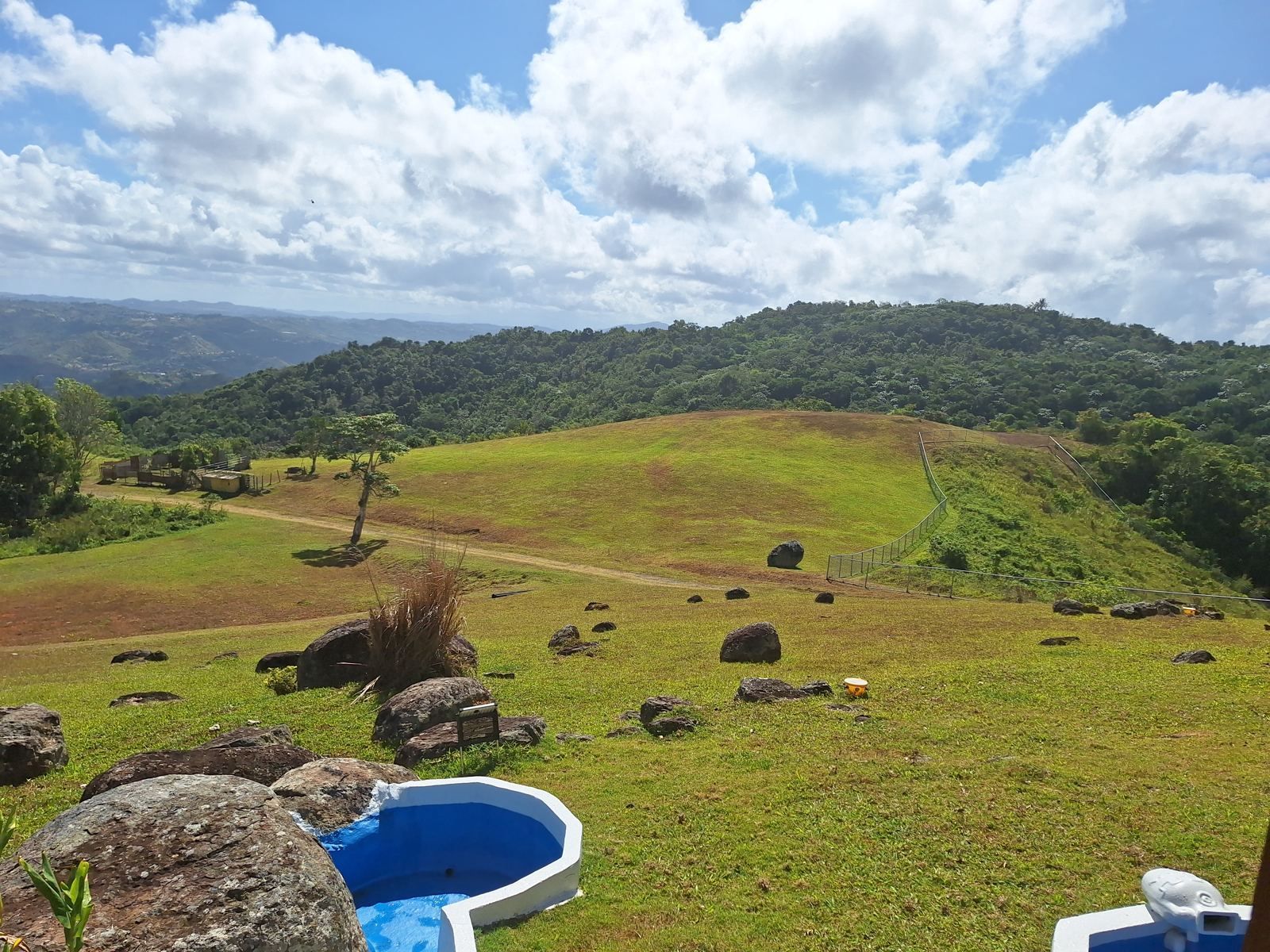
A large rural property in Puerto Rico can earn money in about six ways: leasing land to a solar developer, agro-tourism and farm stays, short-term or long-term rentals of the houses, weddings and events, farming or grazing leases, and the tax credit from a conservation easement. Which ones work depends on terrain, access, zoning and how much of a hospitality business you want to run. Flat land near transmission lines suits solar; mountain land with views, privacy and a cool climate suits people-centered uses. This guide walks through each option, the permits it needs and the trade-offs.
Leasing land for solar
Puerto Rico is rebuilding its electric system around renewable generation, and utility-scale solar developers need land. Projects sell power under long-term contracts approved by the Puerto Rico Energy Bureau, and the largest recent plants, such as the 90 MW Ciro One solar and storage project in Salinas, sit on big, mostly flat parcels on the south coast. Smaller "agrivoltaic" projects that combine farming and panels are also appearing; one approved in Moca pairs a 2.2 MW array with about 10 acres of farmland.
What developers look for:
- Flat or gently sloping, cleared land. Steep, wooded mountain terrain is expensive to grade and stabilize, and rarely competitive.
- Proximity to a substation or transmission line. Interconnection cost often decides whether a site works at all.
- Clean title and a willing owner who will sign a long lease, often 20 to 35 years with extension options.
- Land outside protected agricultural zones. Environmental and farming groups have sued the government over solar projects on high-value farmland, including land in the Reserva Agrícola and in protected rural soil, and have asked the courts to make the Energy Bureau and DDEC identify suitable sites first. That litigation has made developers cautious about agricultural land.
Lease payments are negotiated privately and are not published in a reliable public source for Puerto Rico, so be wary of any figure quoted without a signed term sheet behind it. If you are approached, have a Puerto Rico real estate attorney review the option and lease, especially the decommissioning, restoration bond, property tax, insurance and assignment clauses. For most mountain estates, solar is more realistic as a rooftop or ground-mounted system that cuts your own energy costs than as a lease income stream.
Agro-tourism and farm stays
Agro-tourism turns a working farm into a visitor experience: coffee and cacao tours, harvest days, farm-to-table meals, horseback rides, beekeeping, cooking classes. The Puerto Rico Tourism Company runs an agrotourism certification for working farms, and certified agro-lodgings (agrohospedajes) can add overnight rooms on the farm. Act 60's tourism chapter can grant qualifying tourism projects tax exemptions, and the Tourism Company has made small agrotourism grants in past years.
The income can be real, but it is a hospitality business. You need liability insurance, a municipal license, food service permits if you serve meals, staff who can host guests, and a product people will drive into the mountains for. Our guide to eco-lodge, retreat and agro-tourism properties covers the certification, zoning and site requirements in detail, and what grows at 2,000 feet covers the farming side.
Short-term and long-term rentals
The simplest income from an estate is renting its houses.
- Short-term rentals (under 90 consecutive days) must register with the Tourism Company as an innkeeper, collect the 7 percent room tax from guests and file a monthly declaration by the 10th of the following month. Platforms such as Airbnb collect and remit the room tax on bookings made through them, but registration and compliance remain the owner's responsibility. Several municipalities have moved to regulate short-term rentals, so check local rules too.
- Long-term furnished leases appeal to relocating families, remote workers and people waiting to buy, including some who need to establish Puerto Rico residency. Income is steadier and management lighter than nightly rentals. A lease with option to buy adds a non-refundable option fee on top of rent.
- Second residences and guest houses can be renovated for a caretaker, family or tenants, but confirm that each dwelling is permitted for its intended use before marketing it.
Puerto Rico also extended an income tax exemption on certain residential rental income through 2040; whether it applies to you depends on the property and the lease type, so ask a Puerto Rico CPA.
Weddings, retreats and events
Puerto Rico is a popular destination wedding market: US citizens need no passport, the currency is the dollar, and planners already market rustic haciendas and cool mountain settings alongside beaches and forts. A property with a view, a level lawn or terrace for a ceremony, covered space for rain, parking and road access that a shuttle can handle can host weddings, corporate retreats, yoga and wellness programs, and private celebrations.
Events require a use permit for the activity, fire prevention certification, food and alcohol arrangements, sanitation and parking, and they bring noise and traffic that neighbors notice. We cover the details in starting a farm wedding or event venue in Puerto Rico.
Farming, grazing and agricultural leases
If you do not want to farm yourself, you can lease pasture or cropland to someone who does. Grazing leases for cattle and horses are common in the interior, and a written agreement should cover acreage, stocking limits, fencing and water responsibilities, insurance, access, term and how the land is returned. Income per cuerda from grazing is modest, but a lease keeps pasture managed, fences maintained and the land in agricultural use.
That agricultural use matters for taxes. Land used in a bona fide agricultural business can qualify for property tax exemption and other benefits under the Puerto Rico Incentives Code, whether the farmer owns or leases it; see our guide to property tax on farms and the bona fide farmer exemption. Owners running their own operation can also pursue specialty crops, eggs, honey, flowers or horse boarding; our guide to horse properties in Puerto Rico covers boarding and equestrian uses.
Conservation easements and tax credits
A conservation easement does not produce rent, but it can produce a significant tax benefit. Under Ley 183-2001, an owner who grants a perpetual easement protecting land of natural, agricultural or cultural value to a qualified holder can earn a Puerto Rico tax credit of 50 percent of the appraised value of the easement, taken over two years, carried forward up to 10 years, and transferable once after certification. The encumbered land also gets a property tax exemption. The trade-off is permanent: the development rights you give up are gone for every future owner. We explain the process in conservation easements in Puerto Rico.
Stacking income streams
The most resilient rural properties combine two or three uses that share infrastructure without getting in each other's way. Common combinations:
- A long-term lease of the main house plus a grazing lease on the pasture.
- A small agro-tourism operation with farm tours, plus two or three agro-lodging rooms.
- Curated events a few weekends a month, plus short-term rentals mid-week.
- A conservation easement on the forested slopes, with the house, pasture and building sites left outside the easement for continued use.
Before committing, check that each use is allowed under the parcel's zoning (see Puerto Rico zoning codes for rural land), that your insurance covers guests and commercial activity (see insuring rural property), and that the uses fit how you want to live on the land.
A worked example: 100 acres in Cayey
The estate described on this site shows how these options apply to mountain land. It covers about 100 acres in two fee-simple parcels at roughly 2,100 feet in Cayey, an hour from San Juan, with A-G agricultural zoning and a B-Q district that, per the owners' zoning confirmation, permits eco-tourism, equestrian, veterinary and similar uses. Improvements include a remodeled three-bedroom main house, a second residence ready for renovation, a gatehouse, trails to a summit lookout, two creeks, a 12,000-gallon cistern and Starlink internet, and property tax runs about $990 a year.
The terrain and views point toward a furnished long-term lease of the main house, a renovated second residence for a caretaker or guests, small-group retreats or curated events at the lookout and deck, and grazing on the pasture, with the two separate parcels giving flexibility to dedicate one to a different use. The estate is offered for sale at $2,375,000, reduced from $2,500,000, for long-term furnished lease at $15,000 a month, or as a lease with option to buy, and owner financing is available. It is listed on Stellar MLS as PR9124119. See the photographs and details on the main page, or schedule a private visit.
Frequently asked questions
Can I lease my Puerto Rico land to a solar developer?
Do I need a license to rent my rural property to tourists?
Is agro-tourism profitable in Puerto Rico?
Can I lease pasture to a cattle or horse owner?
Does a conservation easement generate cash?
Which income strategy fits a mountain estate best?
Sources and further reading
- Room tax for short-term rentals, Puerto Rico Tourism Company: 7 percent room tax, innkeeper registration and monthly filing.
- DEPCOM Power builds Puerto Rico's largest solar-plus-storage plant, PV Tech, on the 90 MW Ciro One project in Salinas.
- An agrivoltaic project in Moca would combine agricultural production and energy generation, El Nuevo Día, 2026.
- Organizaciones objetan proyectos solares y piden al tribunal proteger tierras agrícolas, Metro Puerto Rico, August 2025 (Spanish).
- Ley 183-2001, Ley de Servidumbre de Conservación de Puerto Rico, as amended (Spanish).
- Airbnb has collected and paid $16.8M in occupancy tax in Puerto Rico, News is my Business.
- Puerto Rico tax amendments effective for 2025, Alva Tax, on Act 66-2025 extending the residential rental income exemption to 2040.
- 8 reasons to have your destination wedding in Puerto Rico, Discover Puerto Rico.
This article is general information, not legal, tax or investment advice. Zoning, permit, room tax, incentive and easement rules change, and every parcel is different; confirm requirements for any specific use with the relevant agencies and a Puerto Rico attorney, licensed planner or CPA before relying on them. Information about the Cayey estate is provided by the owner and should be independently verified.