If you want the 0 percent rate under Puerto Rico's Act 60 Individual Resident Investor program, your application has to be filed through DDEC's Incentives Portal by 11:59 p.m. on December 31, 2026. Applications time-stamped after that fall under the new 4 percent regime created by Act 38-2026. As of November 2026 that leaves about seven weeks, which is enough time to file but not enough to waste. This page covers who should file now, what the application needs, a realistic week-by-week plan, how the two-year home purchase clock works, and what changes on January 1, 2027.
The deadline, exactly
Act 38-2026, signed in March 2026, rewrote the Individual Resident Investor chapter of the Puerto Rico Incentives Code. DDEC's Informative Bulletin 2026-004, issued in April 2026, sets out how the cutover works in practice:
- The Office of Incentives (OIN) accepts applications for the 0 percent rate until 11:59 p.m. on December 31, 2026, measured by the time stamp on the Incentives Portal filing fee confirmation.
- Applications received before January 1, 2027 are treated as 0 percent applications, with a decree term ending December 31, 2035, and keep the rules in effect when filed.
- Applications received on or after January 1, 2027 fall under the new regime: 4 percent on Puerto Rico-source interest, dividends and post-residency capital gains, 5 percent on certain pre-residency long-term gains, with a term that can run to 2055.
The bulletin ties the filing to the fee payment time stamp. It does not say that a filing becomes valid only once every document is perfect, but an application that is thin or inconsistent invites delays and requests for more information, so the goal is a complete file that is paid and stamped well before New Year's Eve, not a placeholder at 11:58 p.m.
Who should file before December 31
The people who most clearly benefit from filing this year are:
- Investors who expect large Puerto Rico-source gains or investment income in the next nine years. The difference between 0 and 4 percent on a $5,000,000 gain is $200,000. For someone with modest passive income the difference may not justify rushing a move.
- People already planning to relocate in 2026 or early 2027. If the move is happening anyway, filing now locks in the older terms.
- Anyone who lived in Puerto Rico within the last six years but not between January 17, 2006 and January 17, 2012. For these people the new six-year prior non-residency rule may close the door entirely after December 31, while the old test still lets them in.
- Buyers who want flexibility in how they hold their home. Applications filed before 2027 may still satisfy the residence requirement through an eligible Puerto Rico entity, according to the DDEC bulletin. New applicants must hold title personally, jointly with a spouse, or through a qualifying grantor trust.
The people who should think twice are those who are not genuinely prepared to live in Puerto Rico. A decree does nothing for federal taxes unless you become a bona fide resident under the IRS tests, and the IRS has an active compliance campaign aimed at Act 22 and Act 60 taxpayers. See our bona fide residency checklist before you file.
0 percent decree vs 4 percent decree
| Filed by Dec 31, 2026 | Filed on or after Jan 1, 2027 | |
|---|---|---|
| Rate on PR-source interest, dividends, post-move gains | 0% | 4% |
| Certain pre-residency long-term gains | Prior rules | 5% |
| Decree term | Through 2035 | Through 2055 |
| Prior non-residency test | Not a resident Jan 17, 2006 to Jan 17, 2012 | Not a resident in the 6 years before relocating |
| Residence title | Personal, spouse, trust, or eligible PR entity | Personal, spouse, or qualifying grantor trust |
| Home purchase deadline | Within 2 years of the decree | Within 2 years of the decree |
| Annual donation | $10,000 | $10,000 |
The longer 2055 term is the one thing the new regime offers that the old one does not. A holder of a pre-2027 decree can later request an extension to 2055, but under the bulletin the 4 percent rate then applies from January 1 of the year the request is filed. You cannot combine 0 percent through 2035 with an automatic extension.
What the application needs
Requirements change and your attorney will work from DDEC's current checklist, but practitioners describe a file built around these pieces:
- The online application through the Incentives Portal, with the filing fee paid. The payment time stamp is what DDEC uses to place you on one side of the deadline.
- Identification and personal information, including your relocation date or planned relocation date.
- A sworn statement on prior residency, matched to the test that applies to your filing date.
- A criminal record report from your last place of residence. The bulletin notes that OIN also runs its own background check, and that convictions for fraud, tax crimes and similar economic offenses can lead to denial.
- Information supporting your plan to establish residency and meet the decree's conditions, including the residential purchase within two years and the annual donation.
Police reports, apostilles and translations are the items that most often run late, especially across the Thanksgiving and December holidays. Order them first.
A realistic plan from mid-November
- This week: hire a Puerto Rico Act 60 attorney or firm with a current DDEC practice. Many are busy, and El Nuevo Día reported in early November that demand surged as investors rush to beat the changes. Ask directly whether they can take a new file and complete it this year.
- Week 2: order your criminal background report and any apostilles. Confirm which prior-residency test you fall under and gather proof if you have any history on the island.
- Weeks 2 and 3: have a Puerto Rico CPA model the decision. Compare a 0 percent decree ending 2035 with a 4 percent decree ending 2055 for your actual portfolio, and map which gains accrued before your move.
- Weeks 3 and 4: attorney prepares and reviews the application. You sign sworn statements.
- By mid-December: file and pay through the portal. Keep the time-stamped fee confirmation.
- After filing: answer DDEC's follow-up questions promptly, plan the move, and start the home search.
Targeting mid-December leaves room for a portal outage, a missing document or a bank holiday. Do not plan to file on December 31.
Filing before you move vs after
The DDEC bulletin refers to a relocation date but does not, in itself, require that you already live in Puerto Rico on the day you file. Practitioners commonly file for clients who are mid-move or who move shortly after filing. What matters for the tax result is the IRS side: under the federal rules, the year you move can count as a year of bona fide residency if you have no tax home outside Puerto Rico and no closer connection elsewhere for the last 183 days of the year, and you remain a bona fide resident for the next three years. Moving after mid-2026 means 2026 itself probably cannot be your first resident year, which is fine; the decree and your residency can start in 2027. Have your CPA confirm how the filing date, the move date and the first resident tax year line up for you.
The two-year home purchase clock
Every Individual Resident Investor decree requires you to buy residential property in Puerto Rico, to serve as your principal residence, within two years of the decree being issued. Renting does not satisfy it. The clock runs from the decree, not the application, so filing in December does not force a December purchase.
That said, two years passes quickly when you are also moving a household, and the island's best rural properties do not come to market often. Two structures help buyers who want to settle in before they commit:
- A lease with option to buy. You live on the property during the lease and exercise the option to purchase within your two-year window. It lets you test the location, the commute and the climate before closing. See how a lease with option to buy works.
- Owner financing. The seller carries part of the price, which closes the purchase within the window even if a bank loan is slow. See owner financing in Puerto Rico.
For more on what counts as a qualifying residence, including farms and rural estates, read the Act 60 real estate requirement.
What changes on January 1, 2027
- New applications are taxed at 4 percent on covered Puerto Rico-source interest, dividends and post-residency capital gains, and 5 percent on certain pre-residency long-term gains.
- The program runs to 2055 instead of 2035.
- Applicants must not have been Puerto Rico residents in the six years before relocating.
- The residence must be owned directly, jointly with a spouse, or through a qualifying grantor trust. Entity ownership is no longer an option for new applicants.
- Existing decrees keep their terms. Pending applicants can choose to amend into the 4 percent regime by sworn statement if they prefer the 2055 term.
Four percent is still a low rate compared with federal and state capital gains taxes on the mainland, and Puerto Rico remains attractive after the deadline. The 0 percent version simply ends for new filers.
If you want a mountain estate as your residence
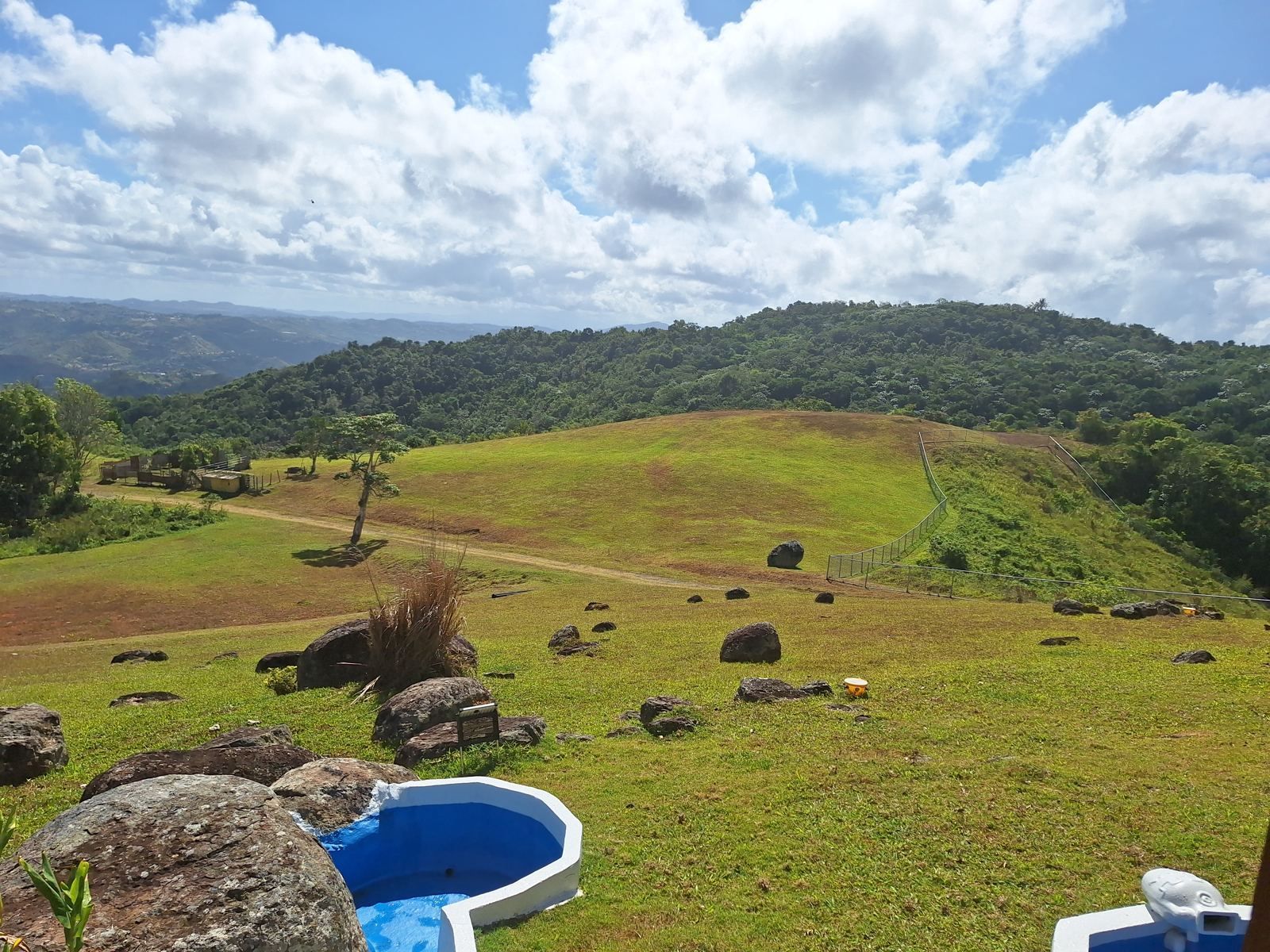
Many decree holders choose condos in Dorado or Condado, but a growing number want privacy, land and a cooler climate. One example is the estate this site describes: about 100 acres (roughly 103 cuerdas) in two fee-simple parcels at 2,100 feet on PR-7722 in Cayey, near the Aibonito line, about an hour from San Juan. It has a three-bedroom, two-bath main house built in 1976 and remodeled in 2026, offered furnished, plus a second residence, two creeks, municipal water, a 550-foot well, a 12,000-gallon cistern, Starlink and a generator hookup, under A-G and B-Q zoning. It is offered for sale at $2,375,000, reduced from $2,500,000; on a furnished lease at $15,000 per month; or as a lease with option to buy, with owner financing available. Property tax is about $990 a year. You can see the property on the main page and arrange a private visit through the inquiry form.
Frequently asked questions
What is the exact Act 60 deadline for the 0 percent rate?
Do I need to live in Puerto Rico before I file?
Do I have to buy a home before December 31?
What if I lived in Puerto Rico a few years ago?
Can I switch from the 0 percent regime to the 2055 term later?
Is Puerto Rico still worth it after the deadline?
Sources and further reading
- Informative Bulletin DDEC No. 2026-004, Puerto Rico Department of Economic Development and Commerce, April 2026, on the filing cutoff, prior residency tests, residence title and extensions.
- Race against the clock: demand surges as investors rush to beat Act 60 changes, El Nuevo Día, November 2026.
- Puerto Rico individual resident investor tax benefits extended through 2055, DLA Piper, March 2026.
- Tax Update: PR Amends the Incentives Code for Resident Individual Investors, Reichard & Escalera, March 2026.
- Act 38-2026 summary, RSM Puerto Rico.
- IRS practice unit on bona fide residency in U.S. territories, Internal Revenue Service, on the year-of-move rules.
This article reflects published sources as of November 2026 and is general information, not legal or tax advice. Act 60 decrees are individual agreements with the Government of Puerto Rico, and DDEC's procedures can change without notice. Confirm deadlines, requirements and your eligibility with a Puerto Rico Act 60 attorney and CPA before filing, moving or buying. Information about the Cayey estate is provided by the owner and should be independently verified.