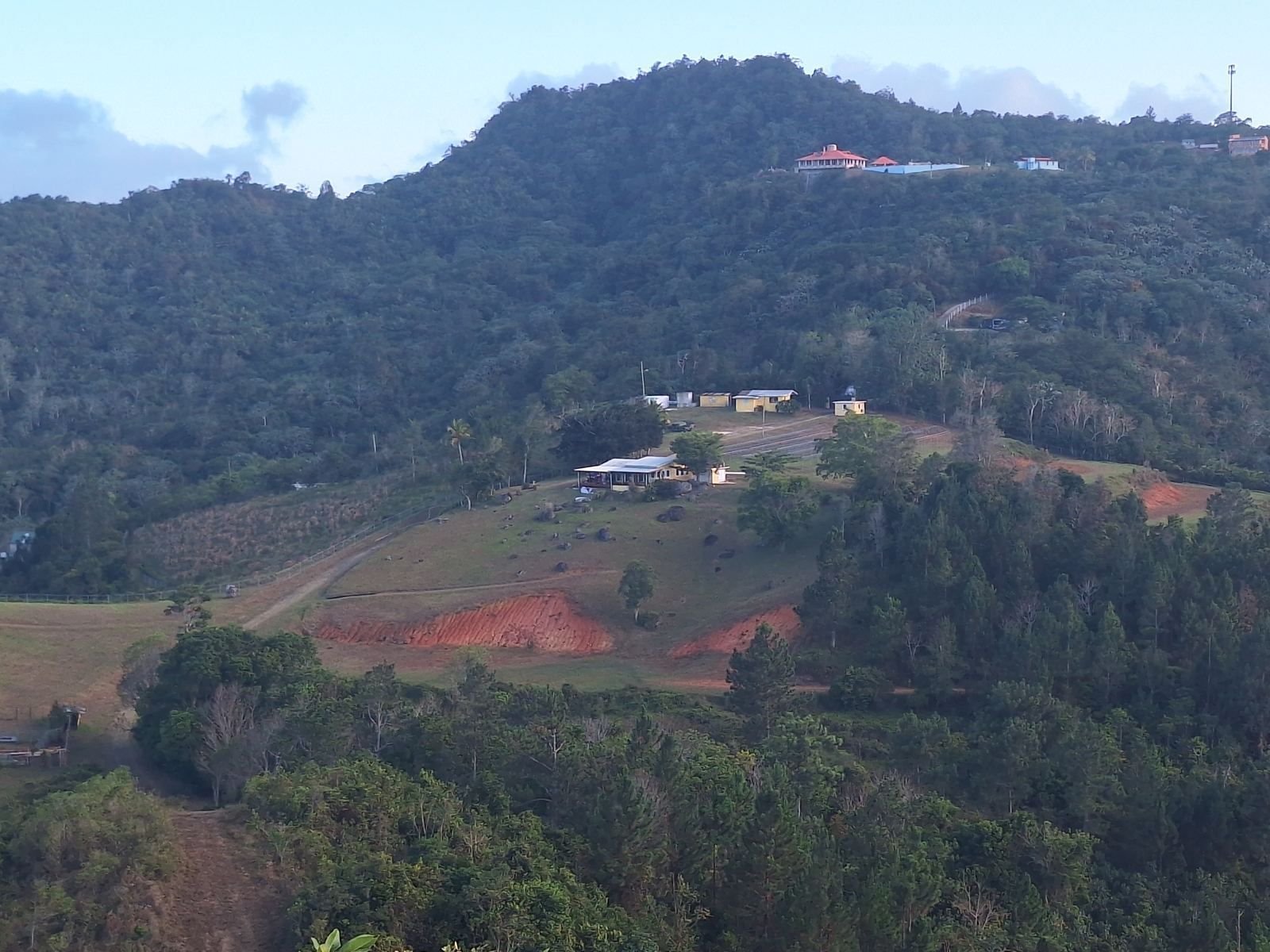
A family compound in Puerto Rico is usually a rural property large enough for several households: a main house, one or more additional homes, shared land and a single gate. It can work very well, especially in the cooler central mountains, but it has to be planned on two levels. The first is physical and regulatory: whether the land allows more than one home, and whether it can be divided. The second is legal: how the property is titled so that it survives the next generation instead of splitting into fractions. This guide covers both.
Why families buy in the mountains
Most multigenerational buyers in Puerto Rico are one of three groups. Puerto Rican families in the diaspora who want a place for parents, children and grandchildren to gather. Relocating families, often Act 60 decree holders, who want older parents or adult children nearby. And families who simply want land, privacy and a degree of self-sufficiency that a coastal condominium cannot offer. The central mountains suit all three: parcels of 20 to 100 acres or more exist within an hour of San Juan, temperatures run well below the coast, and land costs far less per acre than anywhere near the beaches. For the regional picture, see Puerto Rico's mountain second-home areas compared.
What makes a good compound site
- Usable land, not just acreage. Mountain parcels are steep. What matters is how many reasonably level building sites there are, with privacy and views from each.
- Existing dwellings. A second house, even one needing renovation, is worth a great deal, because building a new home on rural land takes permits, time and money.
- Water and power resilience. Several households multiply demand. Look for municipal water plus on-site storage, a generator connection, and room for solar.
- Internal roads and a single controlled entrance. A gated entry with good drives to each house makes a compound feel like one place.
- Distance to services. With older relatives, a hospital and pharmacy within 25 to 30 minutes matter more than they do for a weekend house.
- A title already split into more than one parcel. This is the single most underrated feature, for the reasons below.
Adding homes on rural land
Whether you can build a second, third or fourth house depends on the parcel's zoning district and its soil classification in the municipal land use plan, the size of the land and how each structure will be used. On agricultural land, a principal residence for the owner or operator is generally contemplated, and farm buildings are expected. Additional dwellings may be permitted, may require conditions or a location consultation, or may require that the land first be divided. Permits run through the Permit Management Office (OGPe) or the permit office of an autonomous municipality, and existing structures should be checked for permits before you buy. The details are in Puerto Rico zoning for rural land. If the compound plan depends on building, make the purchase contract contingent on a planner's or attorney's written opinion about what the parcel allows.
Separate parcels and segregation
In Puerto Rico, each recorded parcel is a finca in the Property Registry. Dividing one finca into several is a segregación. It requires approval from the permits office or municipality, a survey by a licensed agrimensor, a deed for each new parcel and recording in the Registry. Minimum lot sizes depend on zoning and soil class, and protected agricultural land can carry high minimums. A seller's remark that land "can be subdivided" is a hope until a segregation is approved.
That is why a property already recorded as two or more fincas is valuable to a family. Each parcel can be titled to a different family member or entity, sold or mortgaged separately, or kept together, all without a new approval. Ask for the Registry certification of every finca and read Puerto Rico Property Registry and title before you rely on the parcel count in a listing.
Ways to title a family property
- Co-ownership in individual names. Simple at purchase. Each co-owner holds an undivided share. Under Puerto Rico law any co-owner can generally ask for the property to be divided, and when co-owners die their shares pass to their own heirs, so the number of owners grows each generation.
- Separate parcels to separate households. Possible when the land is already split or can be segregated. Clean for each family, but the shared land and roads need easements and a written agreement.
- A company, usually an LLC. The family owns membership interests rather than the land. Management, transfers and buyouts are set in the operating agreement, and interests can pass to heirs without dividing the land. Note that for Act 60 decree applications filed on or after January 1, 2027, the decree holder's residence must be held personally, jointly with a spouse, or through a qualifying trust, not through an LLC; earlier applicants may still use an eligible Puerto Rico entity, so confirm with counsel.
- A trust. Puerto Rico has its own trust statute, Act 219-2012, which allows private trusts to hold real property. A trust can keep the property under one trustee for the benefit of the family across generations, within the limits of forced heirship.
Each option has different tax, liability and inheritance consequences, and the right choice depends on where family members are tax resident. This is attorney and CPA work, and it is far cheaper to do before closing than to unwind later.
Forced heirship and keeping the land together
Puerto Rico follows a civil law tradition, and its Civil Code reserves part of every estate for forced heirs. Under the code in force since November 28, 2020, the reserved share (legítima) is one half of the estate, down from two thirds before. The forced heirs are the descendants and the surviving spouse, and the remaining half can be left freely by will. A surviving spouse also has a right to stay in the family residence for life. A testator can prohibit dividing the estate for up to four years, and heirs can agree to stay undivided for renewable periods of up to four years, but a court can allow earlier division for good reason.
The practical lesson for a family compound is that the land will tend to fragment unless it is planned not to. Families keep compounds together by holding the land in an entity or trust whose interests pass to heirs, by leaving each branch of the family its own recorded parcel, or by a will and buy-sell agreement that let one heir keep the property and compensate the others. Owners who are not Puerto Rico domiciliaries may have different rules apply to them, which is another reason to get advice early.
Running a shared property
A written family agreement prevents most disputes. It should cover who pays property tax, insurance, utilities and maintenance and in what shares; who manages the caretaker and the grounds; how use of the main house and common areas is scheduled; how decisions are made; what happens if someone wants out; and how a share is valued in a buyout. On a large property with animals, a resident caretaker is common. Budget for road maintenance, fencing, generator fuel and water storage, which serve every household. See What a finca costs to run for typical figures.
Example: a 100-acre estate in Cayey
The estate this site describes shows what a ready-made compound looks like. It is about 100 acres, roughly 103 cuerdas, recorded as two separate fee-simple parcels at about 2,100 feet on PR-7722 in Cayey, near the Aibonito line and about an hour from San Juan. It has a remodeled three-bedroom, two-bath main house, a second residence for renovation, several building sites, a gatehouse and perimeter fencing, a corral, two creeks, a 12,000-gallon cistern and Starlink internet. The land is zoned A-G agricultural with a B-Q district, historically supported about a dozen horses plus cattle and chickens, and pays about $990 a year in property tax. Because it is already two parcels, a family could title each to a different branch or entity without a new segregation. It is offered for sale at $2,375,000, reduced from $2,500,000, for furnished long-term lease at $15,000 a month, or as a lease with option to buy, and owner financing is available. See the photos and details or arrange a private visit.
Frequently asked questions
Can I build more than one house on rural land in Puerto Rico?
What is a segregation in Puerto Rico?
How does forced heirship work in Puerto Rico?
Can heirs be required to keep a family property undivided?
Should a family compound be owned by an LLC or a trust?
What makes a good site for a family compound?
Sources and further reading
- New Puerto Rico Civil Code: successions and wills, McConnell Valdés, on the one-half legítima, the spouse as forced heir and limits on keeping an estate undivided.
- Act 219-2012, Puerto Rico Trust Act, Government of Puerto Rico.
- The new Puerto Rico Trust Act, McConnell Valdés.
- Estate planning in Puerto Rico, Popular.
- Inheritance tax and inheritance law in Puerto Rico, Global Property Guide.
This article is general information, not legal, tax or estate planning advice. Zoning, permit, succession and trust rules are complex and depend on each family's residence and circumstances; consult a Puerto Rico attorney, notary and CPA before buying or structuring a family property. Information about the Cayey estate is provided by the owner and should be independently verified.