This estimator compares a year of taxes on investment income in three situations: staying on the mainland, moving to Puerto Rico under an Act 60 Individual Resident Investor decree applied for by December 31, 2026 (0 percent), and moving under a decree applied for on or after January 1, 2027 (4 percent). It then subtracts the annual cost of keeping a decree. Every rate is editable. It is a rough first look, not tax advice.
Your numbers (one year)
Annual cost of keeping a decree
| Mainland | Act 60 at 0% | Act 60 at 4% |
|---|
How it works
Mainland. Interest and dividends are multiplied by your federal rate on that income plus the 3.8 percent net investment income tax plus your state rate. Capital gains are multiplied by the federal long-term rate plus the same surtax and state rate. The defaults (20 percent plus 3.8 percent) are the top federal rates on qualified dividends and long-term gains; interest and short-term gains are taxed federally at ordinary rates, which can be higher, so raise the first federal field if much of your income is interest.
Act 60 at 0 percent. Under Act 38-2026, individuals who file an Individual Resident Investor decree application by December 31, 2026 keep the 0 percent Puerto Rico rate on qualifying Puerto Rico-source interest, dividends and post-move capital gains, through 2035. A bona fide Puerto Rico resident generally excludes Puerto Rico-source income from federal tax, which is why the estimator shows no federal or state tax in this column.
Act 60 at 4 percent. Applications filed on or after January 1, 2027 fall under a 4 percent Puerto Rico rate on the same income, with the program extended to 2055. Certain gains that built up before you became a resident are taxed at 5 percent when recognized after the move; this estimator does not include them.
Decree costs. Decree holders must make a $10,000 annual donation to Puerto Rico nonprofits and pay an annual report fee widely reported at about $5,000, and most retain a CPA and attorney. Decree holders must also buy a residence in Puerto Rico within two years, which this estimator does not count as a cost because you keep the asset. For the home-purchase rules, see The Act 60 real estate requirement.
What it ignores. Gains that accrued before the move, sourcing rules for assets held on the mainland, income from outside Puerto Rico, estate and gift taxes, the cost of living in two places during a transition, and whether you actually meet the bona fide residency tests. Those can change the answer completely, which is why the result is an estimate only.
Where the home requirement fits
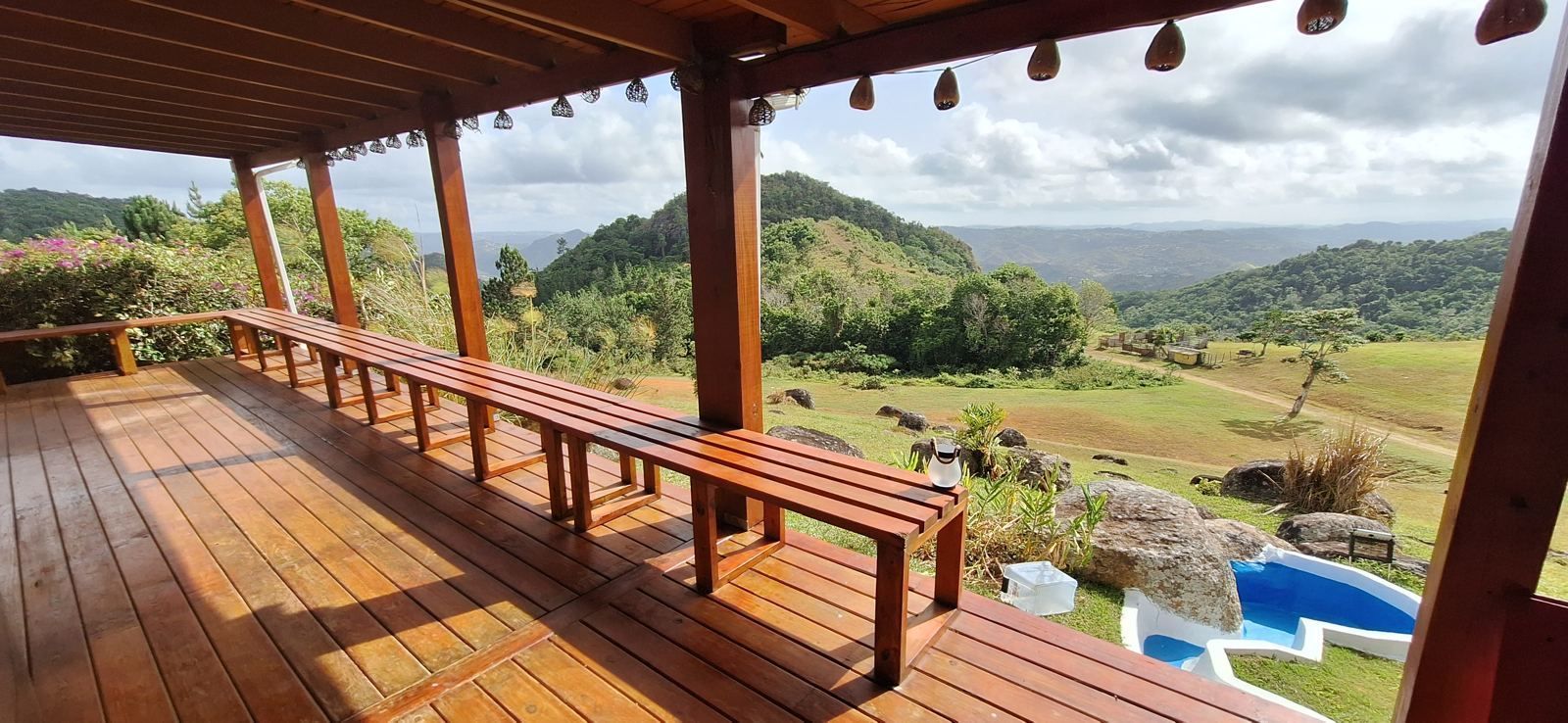
Many decree holders satisfy the residence requirement with a condo in Dorado or San Juan; others want land and privacy. The Cayey estate described on this site is about 100 acres (roughly 103 cuerdas) at 2,100 feet, one hour from San Juan, with a remodeled residence and about $990 a year in property tax. It is for sale at $2,375,000, reduced from $2,500,000, with owner financing available, or on a furnished long-term lease at $15,000 a month or a lease with option to buy. See the main page, or arrange a visit.
Frequently asked questions
What tax rate applies to new Act 60 investor decrees?
What does it cost each year to keep an Act 60 decree?
Why does the estimator show no federal tax for Act 60?
Is Act 60 worth it for smaller investors?
Can I rely on this estimate?
Sources and further reading
- International Tax 2026, Puerto Rico chapter, Chambers and Partners, on Act 38-2026 rates and the 2055 extension.
- Act 38-2026 summary, RSM Puerto Rico, on the December 31, 2026 filing deadline for the 0 percent rate.
- Puerto Rico Act 60: 2026 changes, InCorp, on the 4 percent and 5 percent rates for post-2026 applicants.
- Topic no. 409, Capital gains and losses, IRS, on federal long-term capital gains rates.
- Net investment income tax, IRS, on the 3.8 percent surtax.
This estimator is a simplified illustration, not tax, legal or investment advice. It ignores pre-move gains, sourcing rules, mainland-source income and residency requirements, and Act 60 terms depend on the decree and current law. Consult a Puerto Rico tax attorney and CPA before relying on any figure. Information about the Cayey estate is provided by the owner and should be independently verified.