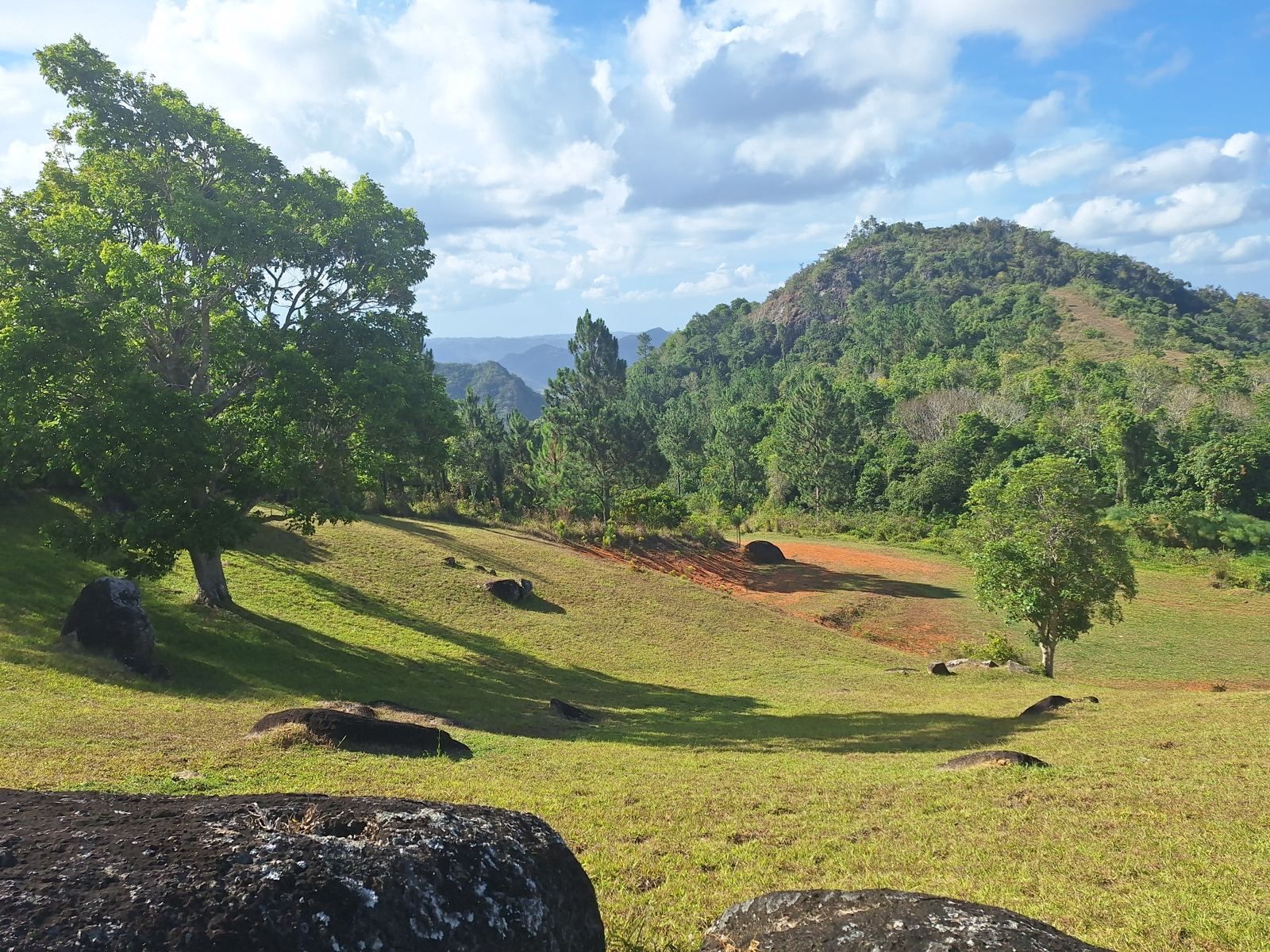
The lechoneras of Guavate are a string of open-air restaurants on PR-184 in Cayey, about an hour south of San Juan, built around whole pigs slow-roasted over wood until the skin turns to crackling. The best known are El Rancho Original, Los Pinos, El Mojito, Lechonera Los Amigos and Doctor Lechón, and on weekends the road fills with families, live salsa and merengue bands, and people dancing between the tables. This guide covers which places to know, how to order, what to eat, and how to time your visit.
What a lechonera is
A lechonera is a restaurant built around lechón asado, whole pig marinated and roasted on a spit over wood or charcoal for hours. The prize is the skin, called cuerito, which should be puffed, glassy and crisp, over moist, seasoned meat. Lechoneras exist across Puerto Rico, but the cluster in the barrio of Guavate is the most famous, and the stretch of PR-184 that climbs from the expressway toward the Carite forest is known as la Ruta del Lechón, or in English, the Pork Highway. Smaller "routes" also exist in Naranjito and Trujillo Alto.
Why Guavate? The barrio sits where the expressway meets the old mountain road into the Carite forest, and for generations families from San Juan, Caguas and the south coast have stopped there on the way to the mountains. Roasting a whole pig was once reserved for holidays and family celebrations; the lechoneras turned it into something you can have any weekend, at a picnic table, with a band playing. That is still the appeal. A Sunday in Guavate is less about any single restaurant than about the whole road: the smoke, the music drifting from one place to the next, and tables of three generations sharing platters.
Getting there
From San Juan, take the Luis A. Ferré expressway (PR-52) south toward Caguas and Ponce, and leave at exit 32 for Guavate. The first lechoneras appear within minutes on PR-184, and more line the road as it climbs into the mountains. Plan on about an hour from the metro area, more on a Sunday afternoon. PR-52 is a toll road, so make sure your car has an AutoExpreso tag. For the rest of the area, see A weekend in the Cayey mountains.
The best-known lechoneras
Ownership, hours and quality change from year to year, so treat this as a starting point and confirm before you go.
- El Rancho Original. The biggest scene on the road, with several pavilions, full live bands with brass on weekends, and a dance floor that fills by early afternoon. Recent reviewers single it out for consistently crisp skin. Parking is tight on busy days, with attendants directing cars into gravel lots. It sits higher up PR-184, with views toward the Carite forest.
- Los Pinos. One of the most famous names on the route and a benchmark for traditional spit-roasted pork, also with mountain views. The setting is more compact and calmer than El Rancho Original, with roving musicians rather than a stage on many days. Parking is along the road shoulder.
- Lechonera Los Amigos. The first lechonera after you leave the expressway, at the first right-hand turn, and the easiest stop for first-timers, with picnic tables under an awning and live trios on weekends. Café Prieto, a coffee shop with a covered terrace over a stream, is next door.
- El Mojito. A long-running and well-known stop on the mountain road.
- Doctor Lechón and El Rancho Nuevo. Also well-known names along PR-184.
Local wisdom is simple: look at the pork before you join a line. Puffed, crackling skin, someone actively carving, and a steady line of locals are good signs. Flat skin, picked-over trays and no line at peak hours are not.
How to order
- Find the food line. You order at a counter in front of the roasting area and the steam trays. Drinks are usually sold at a separate bar, so split up: one person orders food, another gets drinks, a third claims a table.
- Choose the pork. Order by weight, typically by the quarter or half pound, or ask for a combinación, a plate of pork (or chicken) with two sides. Ask for some cuerito with your meat.
- Choose sides. Sides come in small or large containers. Portions at the busier places are generous, and two people can often share one plate with an extra side.
- Find a seat. Seating is usually at shared tables. Sit where there is room.
What to eat
- Lechón asado with plenty of cuerito.
- Arroz con gandules, rice with pigeon peas, the classic partner to pork.
- Yuca al mojo, cassava with garlic and olive oil; tostones, twice-fried green plantains; and amarillos, sweet ripe plantains.
- Morcilla (blood sausage), longaniza (seasoned pork sausage) and, for the adventurous, cuajito (stewed pork stomach).
- Pasteles, plantain-dough parcels steamed in banana leaves, especially around the holidays.
Vegetarians have limited options. Root vegetables and plantains are the safest choices, since rice and beans often contain pork, and cross-contact with meat is common.
Timing, parking and cash
- Go on a weekend for the atmosphere, a weekday for a quiet meal. Sunday is the busiest day and has the most live music.
- Arrive around 11 a.m. Parking and lines are easy before noon. After about 1 p.m. lots fill, waits at the big places can exceed 30 minutes, and some places run out of pork by late afternoon. Traffic heading back down to the expressway on Sunday afternoons can be slow.
- Bring cash. Many places take cards, but terminals go down on busy days and some smaller stands are cash only.
- Budget. Recent visitor reports put a generous plate with two sides at roughly $12 to $20 per person, plus drinks.
- Do not drink and drive the mountain roads. If you plan to enjoy the bars, have a designated driver.
Making a day of it
Many visitors eat at an easy first stop near the expressway and then drive farther up PR-184 to see the others and the forest. Beyond the lechoneras the road enters the Carite State Forest, with trails and the Charco Azul swimming hole. Cayey town, the Monumento al Jíbaro and the overlooks of Aibonito are all within half an hour. In late November and December, Guavate is especially busy as families come up for pork, pasteles and holiday music. For the full calendar, see Festivals and events in Puerto Rico's mountain towns.
If you find yourself coming back every weekend, you would not be the first. The mountains around Cayey have long been where San Juan families keep weekend homes. The estate this site describes is one of them: about 100 acres at 2,100 feet on PR-7722, a short drive from Guavate and about an hour from San Juan, with a remodeled three-bedroom main house, a second residence, pasture, trails and two creeks. It is for sale at $2,375,000, reduced from $2,500,000, for furnished long-term lease at $15,000 a month, or as a lease with option to buy. See the estate or arrange a visit, and read Living in Cayey for what daily life is like.
Frequently asked questions
What is the best lechonera in Guavate?
When should I go to Guavate?
How do I order at a lechonera?
How much does a meal in Guavate cost?
Do Guavate lechoneras take credit cards?
How far is Guavate from San Juan?
Sources and further reading
- Guide to Guavate, la Ruta del Lechón, Discover Puerto Rico.
- Best lechoneras in Guavate I'd actually eat at again, The Traveler, October 2026.
- La ruta del lechón, Platea PR, July 2025.
- For some of the best food in Puerto Rico, head to the Pork Highway, Afar.
- This is the most delicious road in Puerto Rico, Caribbean Journal.
Restaurant names, hours, prices and quality change; confirm before you go. This guide is independent and no restaurant paid to be included. Information about the Cayey estate is provided by the owner and should be independently verified.